

Skip to Content

[vc_empty_space height="5px"]

By Giri Nathan

Feliciano Lopez, who lost in the third round at the Mallorca Open on Thursday, is retiring at age 41. I will remember him as a total anomaly. And not just in the category of Handsomeness. Unlike his face, his 26-year career had so many weird wrinkles to it.

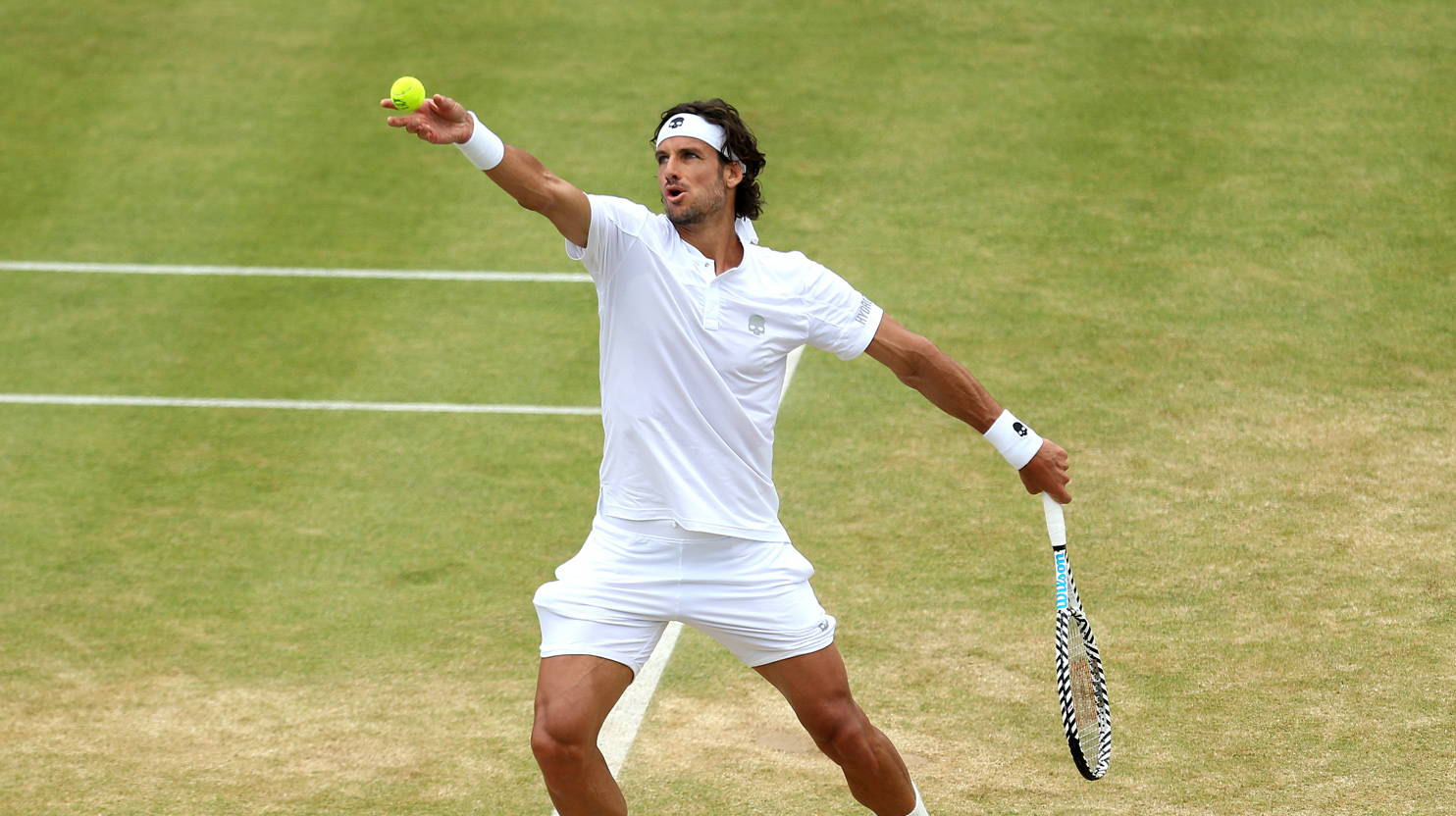
We’ll start with the most obvious. Feli was an anomalous Spanish tennis player, a traitor to his native surface. Picture the clay-court tools that define his countrymen: the stamina, looping groundies, and baseline consistency epitomized by David Ferrer, eventually taken to a logical-physical endpoint by Rafa Nadal. That was his tennis heritage, the intended product of the infrastructure he came up in. But grinding away on the dirt was not Feli’s path. Apparently the aliens who descended on Toledo one day in 1981 were total grass-court traditionalists, because they beamed into him all the skills for that lifestyle. They weren’t sly with their intentions when they gave him that murderous lefty serve. “Effortless power” gets thrown around a lot in this sport, sometimes recklessly, but it truly resides in the left arm of Lopez. His delivery is a masterpiece of energy transfer; his 152 mph heater ranks among the fastest ever. It’s appropriate that in his final pro tournament, he snuck up to fourth in the all-time aces leaderboard, past Goran Ivanisevic. “When I was little, I always dreamed of being able to serve like him one day, and now I’ve overtaken him on the list,” he told the ATP. 

A serve like that deserves to be backed up by volleys just as sharp; Feli had those in droves. The final element a grass champ needs is a keen slice, and Lopez took that cue perhaps too literally, chopping up pretty much every ball on his backhand wing over his career. That tack might have held him back on other surfaces, but it all came together on the lawns, where the service bombs and slices skid lethally. It’s unsurprising that Feli’s deepest runs in the Slams all took place at Wimbledon. In 2005, he became the first Spanish man to reach the quarterfinals since 1972. He matched that result in 2008. He did it a third and final time in 2011, dispatching three-time finalist Andy Roddick en route. But he said his best week in tennis was at Queen’s Club in 2019, when he, as a 37-year-old wild card, won the titles in both singles and doubles. By the end, Lopez’s 87 wins on grass led all Spanish men, ahead of Nadal’s 76.

feli4
How you doin'? (Getty)

Quick serve-and-volley points spare the legs, which might partially explain the other major anomaly of Feli’s career: ridiculous longevity. He played almost 1,000 matches at the tour level, retiring with a 506–490 record. Refining his game over time, he hit his career-high ranking of world No. 12 as a 33-year-old, well outside the typical aging curve. Those figures don’t capture the full picture, however. Here, let me just show you the full picture:

feli5

[Lopez appeared in 79 consecutive Slams, starting his streak at Roland-Garros 2002 and ending it when he failed to qualify for Roland-Garros 2022. That’s the current record on the men’s tour. If you play tennis for that long, you might even pick up a side gig managing a huge event while still an active professional; Lopez has been the tournament director at Madrid since 2019. Weird sport. Weird—and cool—player. Adios!

Stay in touch

Sign up for our free newsletter

More from Racquet

Postcard from Egypt: I Turned a Vacation into an ITF

One 37-year old former D3 player trying to stay fit while traveling with her husband and toddler gets carried away and enters a pro tournament at the encouragement of her hotel pro. What could go wrong?

May 1, 2026

Michael McGregor’s Tennis Love Story

The vibrant and idiosyncratic still lifes—often composed on hotel stationary—are the work of artist Michael McGregor, whose roots in a “huge tennis family” inform one of his favorite themes.

April 28, 2026

Pàdel Shots: a Lexicon

A by-no-means-exhaustive list of the names and neologisms that define a new(ish) sport

April 27, 2026

Why Everyone You Know is Playing Padel

Many sports like to claim that they’re the fastest-growing, and they often have a legitimate claim to the title, depending on how you measure it. But, by almost any yardstick, pàdel really is the world’s fastest-growing sport.

April 27, 2026

Have Pàdel Will Travel

The hottest clubs around the world don’t feature EDM dance floors or after-hours speakeasies. They’re racquet-centric, they’re wellness-affiliated, and they’re taking advantage of the fastest-growing sport on the planet. Welcome to the global network of pàdel.

April 27, 2026

Pàdel Party in the U.S.A.

Pàdel is about people. Whether you play competitively and want to win, or play socially and need a reason to wear that outfit, it revolves around coming together as a team to make all the different reasons come to life.

April 27, 2026
See all posts