

Skip to Content
Features

Dispatch from the World of Blind and Low-vision Tennis

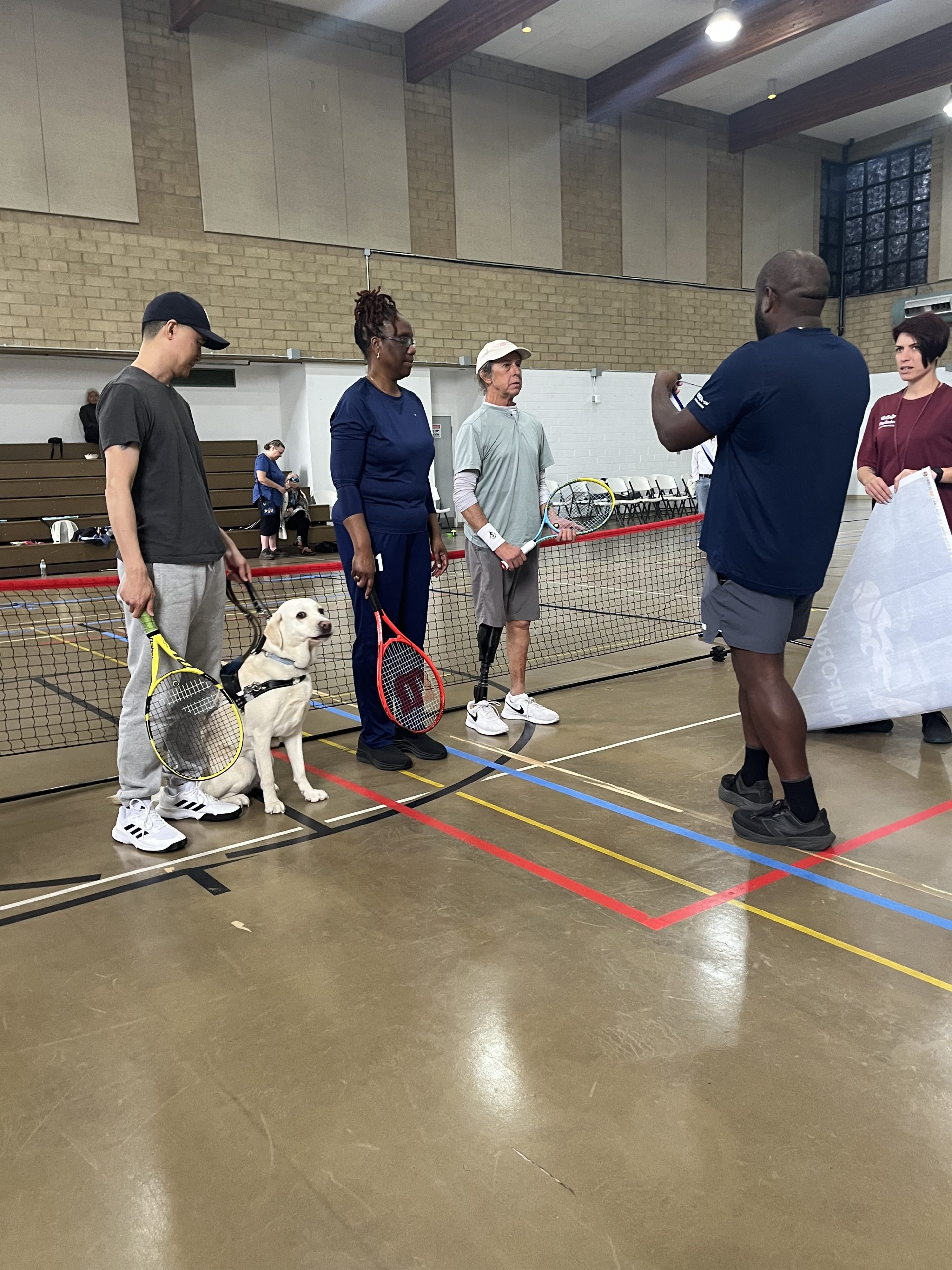
The Wayfinder Family Services Center in Windsor Hills, CA, buzzed with competition. Shoes squeaked across the court, tennis balls filled with bells jingled through the gym, and players could be heard asking their opponents: "Ready?"

By Scott Cameron

11:18 AM EDT on June 2, 2026

On April 25th, blind and low-vision players gathered for Southern California’s first-ever BLV tennis competition, featuring athletes across multiple vision classifications, from fully blind players to those with partial sight. The matches looked different from traditional tennis—smaller courts, audible balls, raised boundary lines—but the competitiveness felt exactly the same.

Players in B1 through B4 categories are allowed varying numbers of bounces depending on their level of visual impairment. Instead of tracking the ball visually, players locate it by sound.

"What's different is the language that you have to use," coach Dan Aubuchon said when asked about how he's had to adapt his coaching style to fit the needs of those with eyesight impairments. "You can't demonstrate and tell people to watch what you do. You have to teach players how to track the ball through hearing."

Aubuchon, 68, knows firsthand how life-changing the sport can be. A longtime tennis coach who spent decades teaching with Peter Burwash Intemational, Aubuchon lost most of his vision following complications from Type 2 diabetes in 2021. After months of severe depression and isolation, he discovered blind tennis and began running weekly BLV clinics in Indian Wells, CA.

One of Aubuchon's students, Will Rogers, captured first place in the B3 division here, after more than a year of training together. Rogers had never competed in any tennis event, let alone a BLV tournament.

"Will made some incredible shots," Aubuchon said. "It was really terrific to experience the joy and camaraderie of all the players that participated."

According to the USTA, BLV tennis is one of the fastest growing adaptive sports in the world, with expanding opportunities to play locally, regionally, nationally, and even globally. With coaches like Aubuchon spearheading the push, BLV tennis isn't just an adaptive sport, it's a life-changing one, too.

For Aubuchon, the social aspect of blind tennis may matter as much as the competition itself: "Blind people tend to be the most shut in," he said. "This gets people out socially. It's great fun."

Scott Cameron played professional tennis for four years. He lives in NYC and works in sports, news, and all things creative. 

Stay in touch

Sign up for our free newsletter

More from Racquet

Spoils Rotten (and Good)

The Best and Worst Trophies on Tour

June 17, 2026

Grass at Last!

Racquet welcomes a shift to the green stuff, and chats with Matteo Berrettini on injuries, BOSS, and the genetic lottery.

June 17, 2026

What if Dan Evans is the Hottest Player on Tour?

On the eve of his retirement, we celebrate the working-class hero with the definitive list of the kind of hot guy shit he's been up to for decades that suggests maybe he is.

June 11, 2026

Racquet’s 2026 Summer Must-Have List

Our Must-Have list is is also a Must-Do and frankly a Must-Be list as well. We don’t make the rules; we just help you abide by them in style, by finding and play-testing and visiting our way around the globe.

June 9, 2026

What Roland-Garros Inherited from Central Africa

Before France inherited its last men's Roland-Garros champion, Arthur Ashe spotted an eleven-year-old boy in Yaoundé. The miracle made Yannick Noah. The question is why tennis never built the road again.

June 8, 2026

Stella Artois, in Paris (and in Clay)

The “Stella Clay Bar” brought together the greats—including legendary Roland-Garros champion Gustavo Kuerten—and tons of raw terre battue on a gorgeous Paris rooftop for everyone to make their mark.

June 4, 2026
See all posts