

Skip to Content
Features

Everybody is Cheating on their Racquet Sport

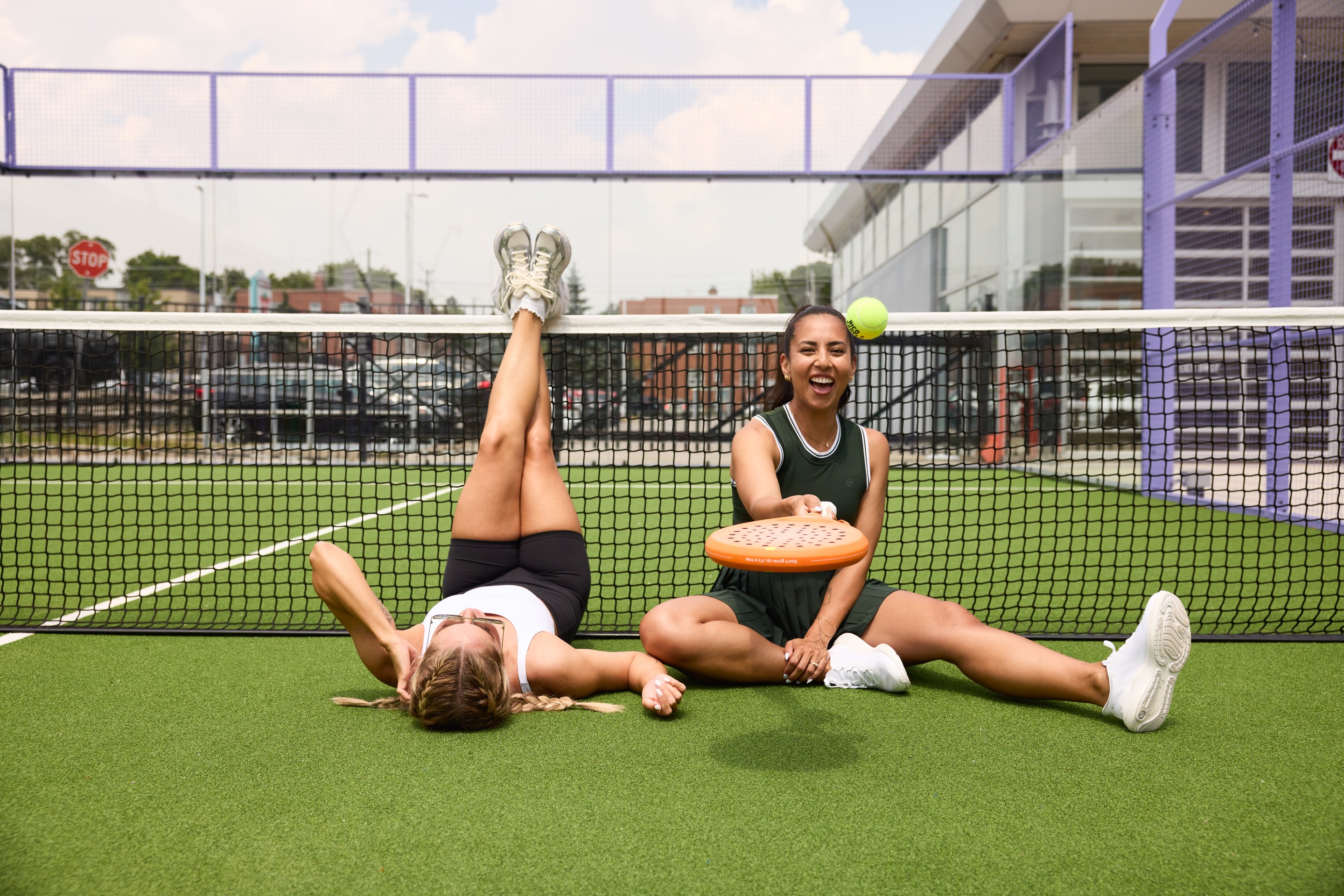
The soundtrack at a modern club has changed from a single note to a full symphony. You still hear the familiar ping of the strings on a tennis ball, but now it's mixed with the rhythmic thwack of pickleball and the bouncy thud of padel on the glass walls. This didn't happen because someone influential decided it should; it happened organically, driven by a new breed of athlete who refuses to be fenced in by tradition.

By Juan García

4:51 PM EST on February 24, 2026

For ages, the American racquet club was a very strict place. You picked your sport early and stuck with it. If you played tennis, your whole identity was tied to the baseline and the courts. Even thinking about picking up a different racquet felt like a betrayal. We were taught that to be good, you had to commit to just one sport. Doing anything else meant you weren't serious and you would sacrifice success down the road.

But check out any lively club these days, and you'll see those old divisions are totally gone. The soundtrack at a modern club has changed from a single note to a full symphony. You still hear the familiar ping of the strings on a tennis ball, but now it's mixed with the rhythmic thwack of pickleball and the bouncy thud of padel on the glass walls. This didn't happen because someone influential decided it should; it happened organically, driven by a new breed of athlete who refuses to be fenced in by tradition. We are living in the era of the Hybrid Athlete.

I've witnessed this evolution firsthand, often caught in the crossfire of early “turf wars.” For years, my main job felt like gatekeeping; I sat through meetings where new racquet sports were treated like a hostile takeover. People were really worried that letting pickleball in would somehow cheapen the club's heritage. However I soon realized that a club isn't a museum; it's a living thing that needs to change, expand and be truly inclusive.

The places doing well right now aren't the ones that “won” those arguments by keeping the status quo. They're the ones that realized there was no battle to be won; only a larger, more interesting culture to build. When we stopped protecting the old rules, and started focusing on letting people move between sports, something shifted. Tennis didn't die out. Instead, it found new energy, getting a new wave of players who started on the smaller courts, while those who had left tennis for good came back with a fresh perspective. Pickleball became the social glue, bringing different generations together. And padel came in like a stylish dynamic game, offering a social, addictive experience.

What fascinates me most as a coach isn't that people are playing more sports; it's the edge they gain from the crossover. In the old days, we valued specialization. Now, in the hybrid model, we value adaptability. There's a secret language happening between these sports that makes athletes better at all of them.

Tennis remains the master craft, the “long novel” of the racquet world. It requires years of technical work and a lot of physicality to cover the court. But when a tennis player spends an hour on a pickleball court, they're basically engaged in a fast-paced reflex workout. The proximity to the net sharpens their reactions and develops a "softness" of touch that is difficult to isolate on a full-sized tennis court. When that same player steps into a padel court, everything changes again. The glass walls make them stop thinking in a linear mindset. They have to learn to play the angles, use their surroundings, and realize the point isn't done just because the ball passed them. They develop a “racquet IQ” that is deeper than a single-sport specialist player can access.

Beyond the biomechanics, there's the big plus of longevity, which is what everyone wants if they want to keep playing into their sixties and seventies. The old one-sport model operated on a philosophy of narrowing horizons. It funneled players toward a single peak, but once that peak was reached, deterioration was inevitable and the athlete was eventually pushed out entirely. It didn’t allow for a change of pace; it only allowed for an exit. The hybrid way is a circle; it lets you keep moving. A sore shoulder doesn't mean a month off anymore; it means a week or two of underhand pickleball or padel serves. A busy time in life with only forty-five minutes to spare doesn't mean you skip playing; it means you jump into an energetic padel match.

The hybrid athlete stays in the game because the game has grown big enough for them. They don't quit when they're not at their best in one sport; they adapt and recalibrate.

As a director, this has fundamentally changed how I view my role. I'm no longer just managing court time; I'm helping shape a lifestyle. We're building third spaces, where social circles mix just as much as skills do. The emotional shift here is the real story: Before, people picked a sport based on access or status. Now, the choice is more personal. On a Tuesday, you might want the intense, solo struggle of a tennis match to blow off steam. On a Friday, you want the fun, chatty vibe of a pickleball mixer. On a Sunday, you want the electric, strategic game of padel.

The hybrid athlete isn't confused or undecided; they are evolved. They've realized that love for a sport doesn't mean exclusion. They have become fluent in three languages in a world that used to only value one. Standing here now, I don't see an industry falling apart or losing its soul. I see one that's finally reaching its full potential. The walls that once kept these sports apart have become pathways. Identity is more relaxed, and because of that, it's stronger.

For the hybrid athlete, the game isn't just what happens on the court today; it's the freedom to pick which court to play on tomorrow. Three sports. Three cultures. One shared future.

Juan Garcia is a San Diego–based racquet-sport advocate dedicated to shaping the next generation of coaches and players.

Stay in touch

Sign up for our free newsletter

More Stories

Can Green Clay Save the World?

Tennis has a complicated relationship with the climate, but new initiatives—including a switch to good ole Har-Tru—show it can be part of the solution.

July 23, 2026

Racquet’s Guide to Los Cabos

When you bring your racquet to Los Cabos, you discover a travel experience where tennis meets the sea, the desert and a vibrant Baja culture—a perfect blend that’s made the Mifel Tennis Open by Telcel Oppo an unmissable stop on the ATP Tour for ten years running.

July 20, 2026

Fit(s) For a Queen

The Serena Williams Fit-Dex is hands-down the best use of the internet.

July 16, 2026

Is it OK for a Player to Disappear?

The conversation around mental health has helped transform the sport, but as openness becomes the norm, another question is beginning to surface: Can vulnerability remain meaningful if athletes no longer feel free to withhold it?

July 14, 2026

Postcard from Wimbledon: Practice Is a Privilege

In this letter of recommendation, our correspondent reports from the All England's Aorangi Park, where the press can sit and absorb a sense of wonder and astonishment and porous, melancholy outsiderness. Where we are reminded, after all, that we are mere witnesses to these shapes and strokes of beauty, and not their arbiters.

July 6, 2026

How Wimbledon Stays Elite, but Not Elitist

Wimbledon Court is the All England Lawn Tennis Club’s effort to give New Yorkers the chance to play on a rare surface in the city’s backyard. It’s also part of a larger effort to ensure the tournament delivers on its promise of “the pinnacle of sport” and broadens the tennis fanbase to the next generation.

June 29, 2026