

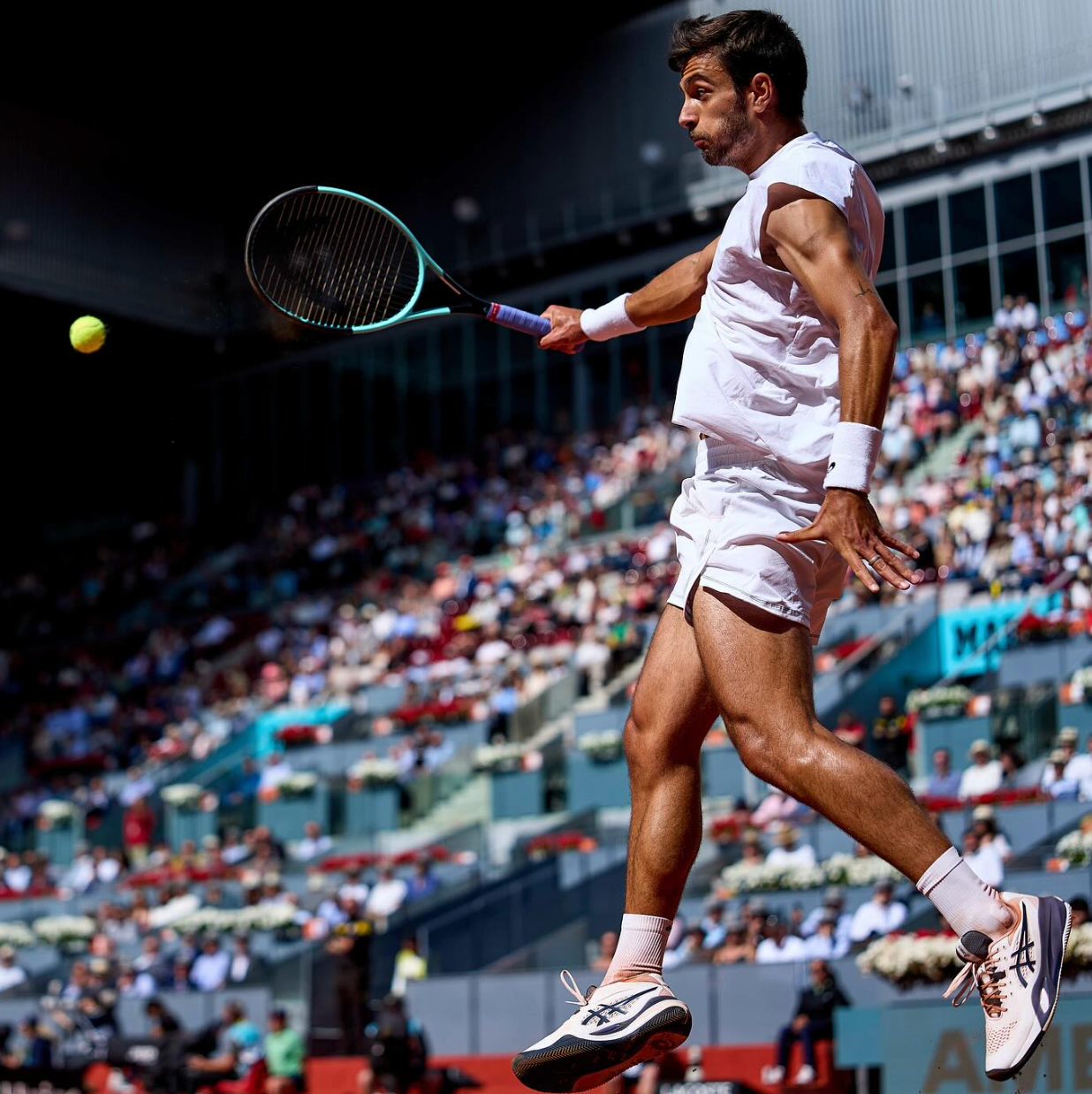
Critics have been declaring the one-hander dead, dumb or disadvantageous for fifty years. Now it’s truly in danger of extinction, as players and coaches plump for the power and security of two hands. Just five active names in the ATP top 100 still rock the OHBH. But here’s the curveball: by holding on to what many say is an outdated stroke fit for grandad’s day, they may be holding a royal flush, both strategically and financially.
Take Lorenzo Musetti, a dangerously attractive Italian with the most graceful one-hander on tour, now that Stan Wawrinka has sadly retired. His ‘granddad’ stroke, firing like a howitzer, helped him secure the trophy at the Lyon Open recently, zapping one-handers at Taylor Fritz until the American withered in two sets. Detractors feel Musetti won despite his backhand, which they say is fiddlier (you have to set up precisely to make OHBHs work) and more attackable than a two-hander, especially with high balls.
Practitioners say the very intricacy of the move is what creates a champion. Its difficulty means you need split-second timing and footwork; skills that hone your edge on both wings. Denis Shapovalov goes so far as to dub the single-hander superior to its ham-handed cousin, calling it “a better shot, because I can create more with it— creating angles with it that would be very tough with the two-handed backhand.”
The single-hander is rarer still on the women’s tour. But those who use it wield that shot like the deadly scalpel it is—even when it’s an unintended plan B. Last year, an injured Karolina Muchova said bad wrist be damned, abandoned her regular two-hander and whipped one-handers to dazzling effect, even reaching the US Open quarterfinals. As she discovered, placing your non-dominant hand on the racquet throat lets you sneak in slices that can wrong-foot and infuriate opponents. Now, despite healing and returning to two-fisted play, OHBHs are part of Muchova's repertoire.
But the queen of the single-shooter is Lilli Tagger. Aged just 18, the Austrian’s already reached No. 45 in WTA rankings. Her effortless ability to snipe backhands in all directions has made her a force to watch. It may help that so many opponents underestimate the versatility and longer reach of the ‘oner,’ as Venus Williams and Liudmila Samsinova did when losing against the teenager recently.
And man, does it look gorgeous. “Everyone has a unique way to set up [that move]” noted Grigor Dimitrov in a players’ round table: “you can never copy [someone’s] one-handed shot.” Aesthetically, each one is like a player’s fingerprint; elegant as a pirouette, even as it generates jackhammer levels of power. Starting with a cobra-like coil and ending with arms angelically spread, it’s a manoeuvre made for our era of slow-mo TikTok vids. As the kids might say, it’s vibe-coded for rizz. “A one-handed backhand will always be best no matter what the expert say it’s grace & finesse exemplified,” sighs one netizen under a reel of Lilli Tagger. “God that’s a sexy backhand,” moans another.
And where viewers drool, brands take notice. Call it basic supply and demand: the increasing rarity of the single-hander makes it a luxury commodity that pops off posters and press release photos. Just like musty old vinyl records were predicted to die, then became the gold standard of cool, the OHBH's classic elegance makes it a perfect fit for century-old brands. No surprise, then, that blue-chip labels like Lacoste, Bottega Veneta and Rolex have eagerly sponsored Dimitrov, Musetti and Tsitsipas. It doesn’t hurt that the shot reflects the halo of tennis GOAT Roger Federer, whose single-hander is a timeless marker for grace, and still inspires players to ditch the double-hander today.
Will OHBHs ever dominate the tour again? Unlikely. Are they a silver bullet to victory? Hell no. But those who practice the art know what strengths it affords them as players and brand ambassadors. In 2024, the ATP filmed a skit featuring Wawrinka, Shapovalov and Co., cheekily ‘acknowledging’ the demise of one-handers. They were going, as Dimitrov narrated, to switch to the double-hander—for everything. Cue the gang clumsily stirring teacups, fumbling with doorknobs, and brushing their teeth with all ten fingers.