

Skip to Content
Newsletter

Dayana Yastremska’s Double Fault

[vc_empty_space height="5px"]

By Giri Nathan

[vc_empty_space height="15px"]America’s days as the stand-alone economic superpower are long gone, but for better or for worse, we still export culture like nowhere else. American pop culture becomes global pop culture. American political concerns often become the concerns of the world. And in the past few weeks, specifically American political frustrations have been aired out worldwide. Mass protests against police brutality began stateside after the death of George Floyd in Minneapolis in June, and then spread all over the world—to Kazakhstan, to Japan, to Estonia. Sometimes, but not always, they were staged in front of U.S. embassies. American protests were mirrored in countries where the police isn’t as militarized and unaccountable as the American force; where systemic racism may exist, but differs greatly in the particulars, given local demographics and history; where the American concepts of race don’t map cleanly onto the local concepts. Our agitation led to a global agitation, against things that all right-thinking people can recognize as wrong: state actors committing violence with impunity, and bias on the basis of skin color.

Watching the international and decentralized sport of tennis navigate this political climate has been interesting. Some players are perfectly equipped for the task. There are Black American athletes speaking on a subject they live every day. That might be James Blake talking about how he was brutalized by police even as a millionaire athlete; Coco Gauff using an ingenious bait and switch to direct her fans to demand justice for Breonna Taylor’s wrongful death; Francis Tiafoe organizing fellow players to compile a protest video and calling for new talent pipelines to diversify tennis in the U.S.; or Naomi Osaka writing probingly about why she flew to Minneapolis to grieve and protest, and how race plays out in Japan. These players are speaking in an idiom, and within a political context, that is familiar to them. Their statements are insightful and worthy of any fan’s attention.

And then you have, well, everyone else. They’re mostly well-intentioned, if clumsy. Admittedly, it would require some curiosity about the outside world to really figure out what’s happening in the U.S., and indeed not all Americans even have the empathy or patience to do that, and aren’t we supposed to be getting back to practice courts soon? But they might be happy whatever slogans are handy. You have coaches wearing Black Lives Matter T-shirts in the stands of the UTS exhibition. You have a player like Victoria Azarenka, who in this week’s excellent Racquet podcast talks about supporting causes even though she still can’t intuitively grasp the facts of American racism. Vika, who grew up in Belarus and has lived much of her adult life in the U.S., says she spoke with Serena Williams to better understand  “the emotion of just hating someone because of their skin color.” Her limitations don’t dampen her support. “I can’t understand what people are feeling,” she says, “but I just want to be helpful where I can be helpful, no matter what the situation really is. If I can help somebody to do better or be better, why wouldn’t I take the chance to do that?”[vc_empty_space height="25px"][vc_empty_space height="15px"]

dy2
Hmm.

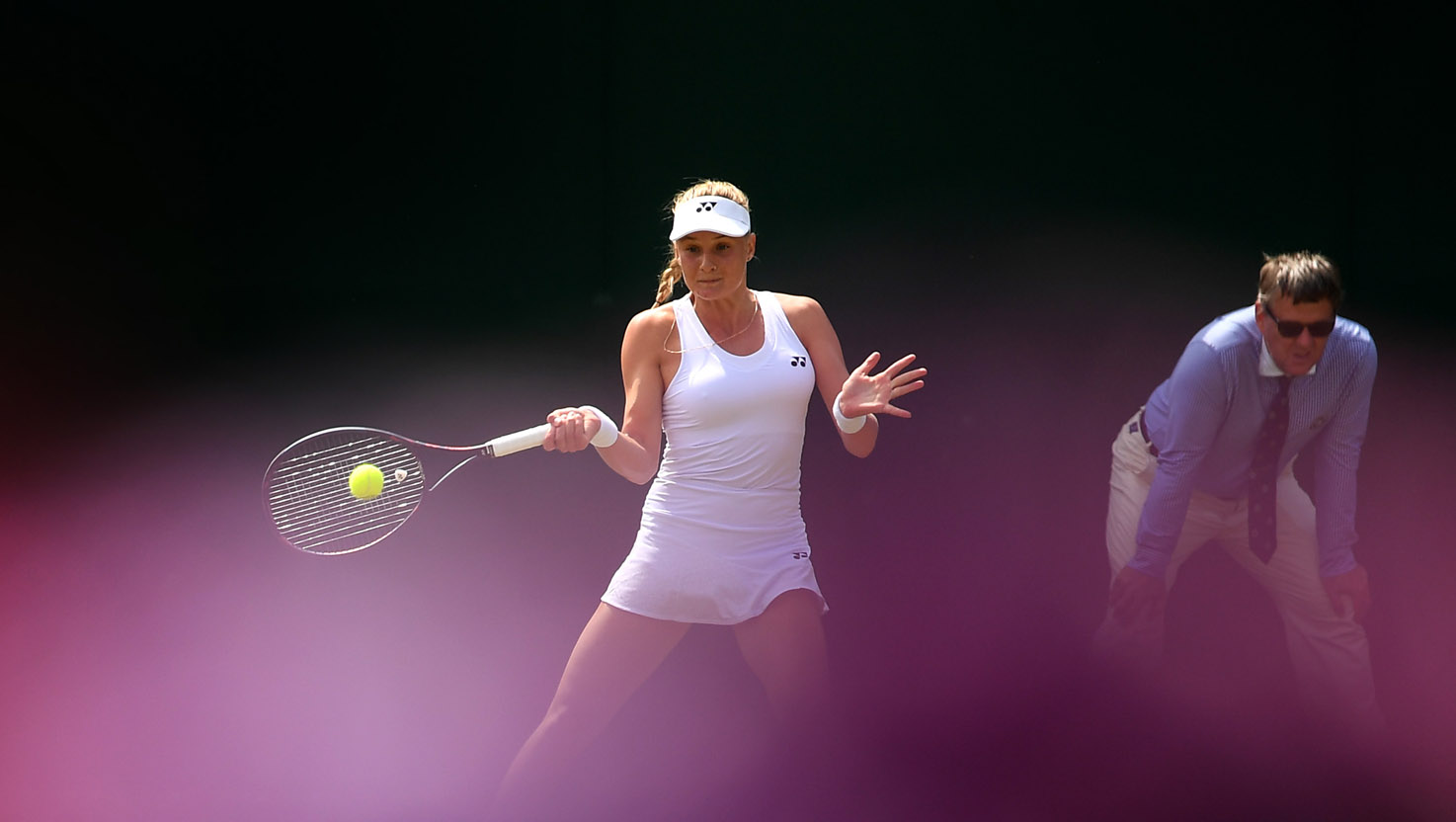
And then you have a young player like Dayana Yastremska, who hails from neighboring Ukraine, who put some unfortunate images into the world this week. Half her body is painted to look like the body of a Black person, with the caption “EQUALITY.” Do I think a 20-year-old raised in that country with that demographic breakdown, within the tunnel-visioned lifestyle that tennis requires, is particularly well-equipped to comment on this cultural moment? No. Do I think a top 25 player should have a PR person savvy enough to tell them not to produce an image that will be seen as brutally poor taste in many other parts of the world? Probably. Do I think she was making a gesture in good faith, far removed from the demeaning history of blackface in many parts of the world? Sure, and it looks like she’s learned how this effort went awry. Do I also think this was a throwaway vanity stunt with a tinge of feel-good? Yes, and in that sense it isn’t really worth defending. Yastremska has since shared an apology, which read in part: “I did not intend to caricature but to share my feelings about the current situation: we should all be treated as equal. I am so disappointed that my message has been corrupted: these pictures divided people when they were meant to unite. That’s why I deleted them.” Now the images are gone, but historians of gaffe (i.e., internet users) will treasure this as a remarkable artifact of the year 2020. It is always fascinating, as an American, to see our own concerns reflected back to us by the rest of the world. If we’re going to be this self-centered, the least we can do is stay curious about our own reflection.[vc_empty_space height="25px"]Dayana Yastremska at Wimbledon. (Getty Images)[vc_column width="1/6"][vc_tweetmeme share_via="racqetmagazine"][vc_column width="1/6"][vc_facebook type="button_count"][vc_column width="1/6"][vc_column width="1/6"][vc_column width="1/6"][vc_column width="1/6"][vc_empty_space height="45px"][vc_column width="1/6"][vc_column width="2/3"]

Buy Now
Issue Nos. 1-2

racquet_nos_1-2

[vc_btn title="BUY" style="outline" shape="square" color="success" size="lg" align="center" button_block="true" link="url:https%3A%2F%2Fracquetmag.com%2Fproduct%2Fnos-1-2%2F|title:BUY||"]Copies of Racquet No. 1, our launch issue, are almost sold out. Order a copy bundled with our sophomore effort for just $25. *Free shipping to domestic USA*[vc_column width="1/6"]

Stay in touch

Sign up for our free newsletter

More from Racquet

An Open Letter To Daniil Medvedev: Are You “So Back?”

Racquet’s See You In Court is a regular column in which Melissa Kenny, a famously mediocre lifelong player, opines on pro tennis. She also writes Hard Hitting, a Substack about the thrills and frustrations of recreational tennis.

March 20, 2026

Dispatches from the Desert

Our Managing Editor Wendy Laird is on the grounds and has Dispatches from the Desert coming in on a regular basis: Today the BNP Paribas Open is over. Long live the BNP Paribas Open.

March 6, 2026

A Playable Feast

There’s something wonderful about seeing “closed for the season” on a hotel’s website. They’re just four words, but they say so much: we don’t wring every penny from this property; this location has a “season;” this hotel values your experience far too much to stay open during sub-par weather. “Closed for the season” has a lot of sexy indifference to it; it makes you want to visit even more.

March 2, 2026

In Dubai, Uncertainty on Court and in the Skies

By the end of the week, it was hard to tell what felt more fragile: the schedule, the draw, the final, or the belief that sport can stay separate from the world around it.

February 28, 2026

Jessica Pegula has a Serious Sleep Routine

World No. 5 Jessica Pegula has had a busy few weeks. From lifting the trophy in Dubai for her fourth Masters 1000 title to becoming Blueair’s air wellness ambassador, her results call attention to what many of us already know: sleep hygiene, including managing air quality, is an important part of recovery and overall health.

February 27, 2026

Racquet’s Guide to Indian Wells

For the uninitiated, we humbly present the following guide to the area surrounding the area. While by no means exhaustive, here are some picks for places of interest while on your way to and from the tournament: some restaurants, sights and even a couple places to stay. And if you’ve been to Indian Wells before, welcome back: It’s going to be another great year.

February 27, 2026
See all posts