

Skip to Content
Features

Have Pàdel Will Travel

The hottest clubs around the world don’t feature EDM dance floors or after-hours speakeasies. They’re racquet-centric, they’re wellness-affiliated, and they’re taking advantage of the fastest-growing sport on the planet. Welcome to the global network of pàdel.

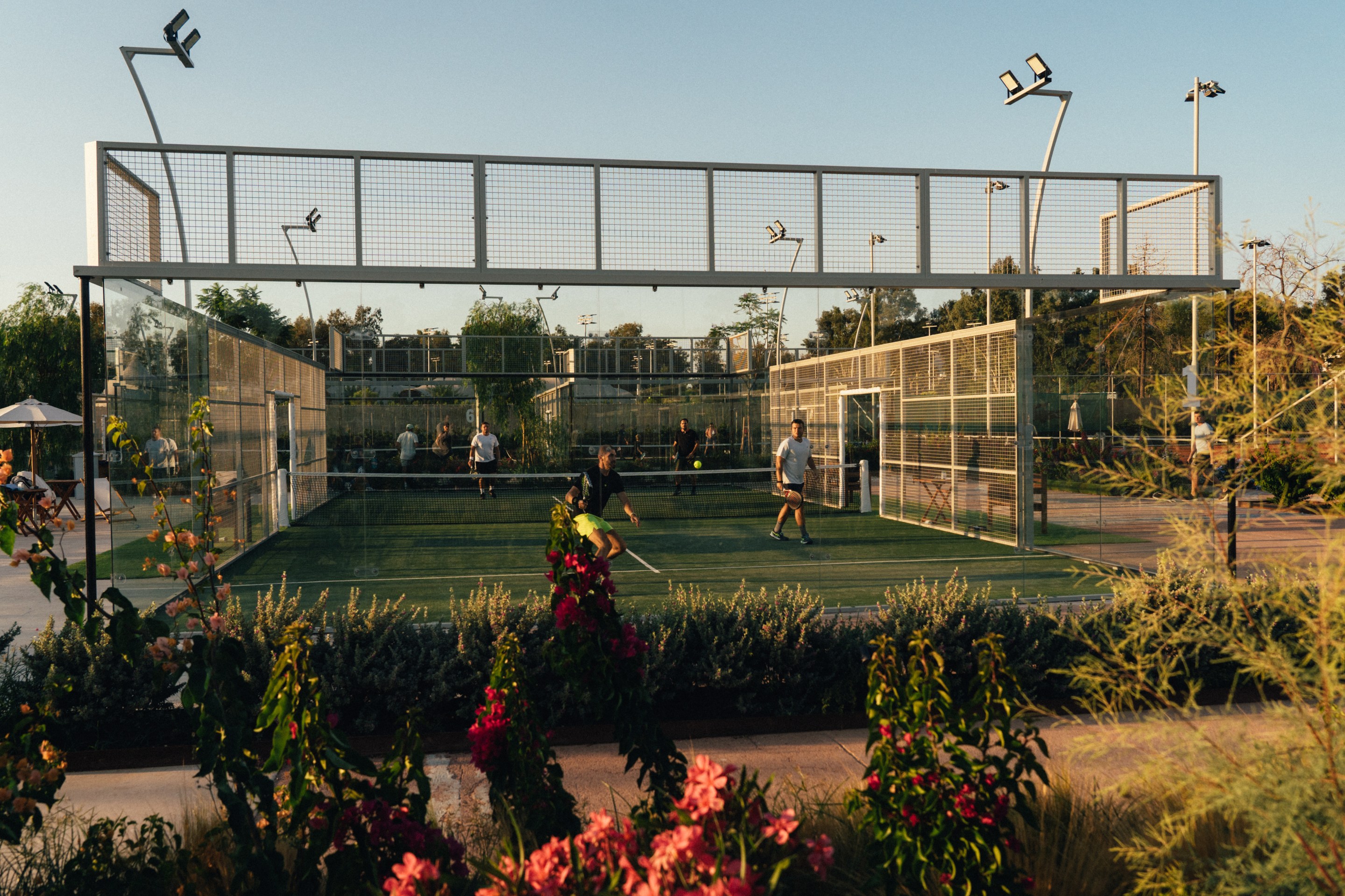
Set against the backdrop of Glyfáda, a chic enclave on the Athenian Riviera, the emergence of pàdel is palpable. In a locale where sun-seekers can easily pop in for a visit to the Acropolis before dropping bags at the newest ACE hotel, and hang by the pool for a DJ set, all before hitting the beach, the courts beckon. This past June, I visited the TenTwenty Club—named after the dimensions of a pàdel court—where a byzantine maze of glassed-in courts sit next to gorgeous clay tennis courts and a yoga pavilion. All this surrounds a brutalist clubhouse, dotted with wildflowers and anchored by La Linda, a South American bakery known as much for smoothies and the lamination of its croissants as for wellness. Here, Isabella Aquilina and her husband Marc Missirian are translating their passion for hospitality and sports into a vibrant pàdel club that resonates with discerning visitors seeking both leisure and connection. 

Ten Twenty Club, Athens

Missirian’s insight into the sport, honed during his time running the Qatari basketball association, reveals an appreciation for pàdel's unique accessibility and appeal. “In the Gulf, I encountered pàdel everywhere—people were importing coaches from Spain and forming private clubs. It was a clear signal of a sport on the rise,” he recalls. “When we saw the potential for such a community in Athens, we knew it was the right move.” 

The growth of pàdel is no accident. The sport has capitalized on a broader trend towards active living and social engagement, particularly among affluent, wellness-focused individuals. As Aquilina notes, “This isn’t just about playing a sport; it’s about integrating it into a lifestyle that prioritizes health, wellness, and social connection.”

Privé Padel, Montauk

The Glyfáda project is just one example of a global phenomenon, as high-end clubs in glamorous locations take advantage of the huge uptick in pàdel’s popularity. It’s happening everywhere, from the Hamptons—with its Privé pàdel, Racquet Lounge, and bohemian lifestyle purveyors Brisas—to the Middle East (MatchaDBX alone is worth the trip to Dubai); from Miami’s massive pàdel footprint to new clubs expanding from Nashville to Toronto; and in Milan, where Italian footwear brand Golden Goose has opened Arena, a pàdel club-meetsretail space. The commonality between all these destinations isn’t just that they offer pàdel play in beautiful settings; it’s the lifestyle-first angle that ties these concepts together (tennis is late to the ball here, per usual). With plunge pools, smoothie bars, red-light therapy, fashion-forward and—yes—perfectly laminated baked goods as important as training facilities and equipment, pàdel is leapfrogging other sports in the racquet space as a way to link play to life.

Nicholas Solarewicz, co-founder and CEO of Privé, emphasizes this intersection of sport and lifestyle: “Pàdel, as we see it, effortlessly plays along the line of inclusivity and exclusivity. It attracts top athletes from diverse disciplines, while also offering a platform that embodies luxury and fashion.” 

The relationship between pàdel and its more traditional cousin, tennis, is particularly illuminating. Pàdel emerged as a friendlier, more-approachable alternative to tennis, drawing in a vast customer base eager for a sport that eschews the traditional formality often associated with tennis clubs. This shift speaks to a broader opportunity in presenting a warm front door that’s wide open for newcomers. Tennis could stand to take note.

Matcha Club, Al Quoz

“The tennis explosion provided a customer base who was thirsty about something that is friendlier and easier,” says Pablo Carro, founder of Playtomic, the tech platform that enables much of the pàdel world’s court booking, networking and matchmaking. 

Unlike its stately cousin—so often encumbered by hidebound traditions and bureaucratic inertia—pàdel is open, freewheeling, and brilliantly opportunistic. Its diaspora stretches from humble courts in Mexico, where the sport originated, to the Mediterranean playgrounds of Marbella, often seen as an inflection point that accelerated the sport across Europe, the Middle East, and now, back to the Americas. Pàdel is not just thriving; it’s exploding, driven by a motivated and internationally minded coterie who encounter very limited barriers to entry. 

The professional side of the sport is rapidly maturing. Leagues are proliferating; top players are piling in. Yet, as with any true movement, growth starts at the ground level. Pàdel’s real genius is both its accessibility—no stiff dress codes, no glacial waitlists for courts, social doubles over one-on-one gladiatorial combat— and its connection to authenticity. 

Perhaps nowhere is this better embodied than on Formentera, the smallest of Spain’s Balearic Islands, where Carro has built a pàdel retreat called Rocalla where dirt roads and nods to the natural rocky topography offer visitors a place to slow down amid a rustic setting. 

Rocalla Padel, Formentera

“It’s a very personal project. It came from a need for something much more genuine, with soul,” he says. “My friends and I were all looking for a place where we could play pàdel, practice yoga, enjoy wellness, spend time at the beach, and share a farm-to-table restaurant concept. It’s a truly authentic place, one that allows us to connect with ourselves, with the sport, and with each other.” 

Caitlin Thompson loves to travel with her racquets, a coterie which now covers two sports. 

Stay in touch

Sign up for our free newsletter

More from Racquet

Pàdel Shots: a Lexicon

A by-no-means-exhaustive list of the names and neologisms that define a new(ish) sport

April 27, 2026

Why Everyone You Know is Playing Padel

Many sports like to claim that they’re the fastest-growing, and they often have a legitimate claim to the title, depending on how you measure it. But, by almost any yardstick, pàdel really is the world’s fastest-growing sport.

April 27, 2026

Pàdel Party in the U.S.A.

Pàdel is about people. Whether you play competitively and want to win, or play socially and need a reason to wear that outfit, it revolves around coming together as a team to make all the different reasons come to life.

April 27, 2026

SERVE Brings Out the Boys

Building a community, one pàdel club at a time, is what the Londoners behind Gayns are up to. From drills to pàdel explainers, kinship comes first.

April 27, 2026

Dr. Martita Està in Casa

Spanish player Martita Ortega—known as La Doctora on the professional pàdel circuit for her dazzling game as well as her active medical practice—is a breakout star in the PPL. Her on-court prowess has taken her to the heights of the game: in 2019, Martita became the youngest player ever to achieve a number-one world ranking, and her high-energy pàdel play has netted her more than 10 international titles. Racquet sat down with the Madrileño at the beginning and end of the PPL season to find out more. 

April 27, 2026

Postcard from SoHo: The Wall Always Wins

At Wilson’s SoHo flagship, …Anyone for Tennis? hosted Off the Wall, a panel bringing together fashion, media, and music to reframe tennis as a shared language of culture and play.

April 27, 2026
See all posts