

Skip to Content
Newsletter

Jack Sock Gets Back On The Good Foot

Jack Sock has stumbled into an oasis after two whole seasons in the desert.

It looked slightly surreal at the time and looks even more so in retrospect, but at the end of the 2017 season, Sock was the No. 8 player in the world. He was a Paris Masters champ and runner-up at the ATP Finals; he hauled in three titles and $2.8 million. That was a weird time for the tour, hollowed out by injuries to top players—think Filip Krajinovic in a Masters final—but it seemed like this dude from Kansas with an eccentric, inimitable forehand was going to be a top 20 fixture for a good while. And, at age 25, perhaps also the top player in American men’s tennis for the near future.

Then Sock lost the thread. In the 2018 season, there were 15 tournaments where he lost his first match. He did not string together consecutive wins until October. He went 9–22 on the season and fell out of the top 100 in singles. But during this collapse, there was at least something in his game still clicking: He dominated in doubles, winning Wimbledon and the US Open. Sock’s backhand is plain, and his movement can be lacking, but just give him half the court to control with that wicked forehand and net game, and he’ll still be lethal. So despite all the singles dysfunction, Sock could hold on to some external validation that he was among the most gifted tennis players in the world. He still had the tools. “I think without the doubles success, I don’t know [what] I’d feel about the sport. I’ve been in some low places this year,” he said at the time.

But in 2019, that all slipped away too. He fell out of the top 100 in doubles. He lost all eight singles matches he played. He tore two ligaments in his right thumb. There was total hibernation between January and July. When he did take the singles court, he appeared visibly out of shape. Possibly there was more dogging him than just the hand injury. There were losses in Challengers to players ranked No. 336, 340, 449. His only singles win of any kind: over Fabio Fognini, in the make-believe realm of Laver Cup. All of Sock’s singles points evaporated and he ended last year an unranked player surviving on the mercy of wild cards.[vc_empty_space height="45px"]

The good ol' days with Vasek Pospisil, Beijing 2015

One such mercy was a wild card to the Delray Beach Open last week. He took on world No. 51 Radu Albot in the first round. Going in, Sock, now 27 years old, had not won a tour-level match in 15 months and gave no clear indication that anything would change soon. Then again, Albot had missed a month of play with a shoulder injury, and had yet to pick up his first win in 2020.

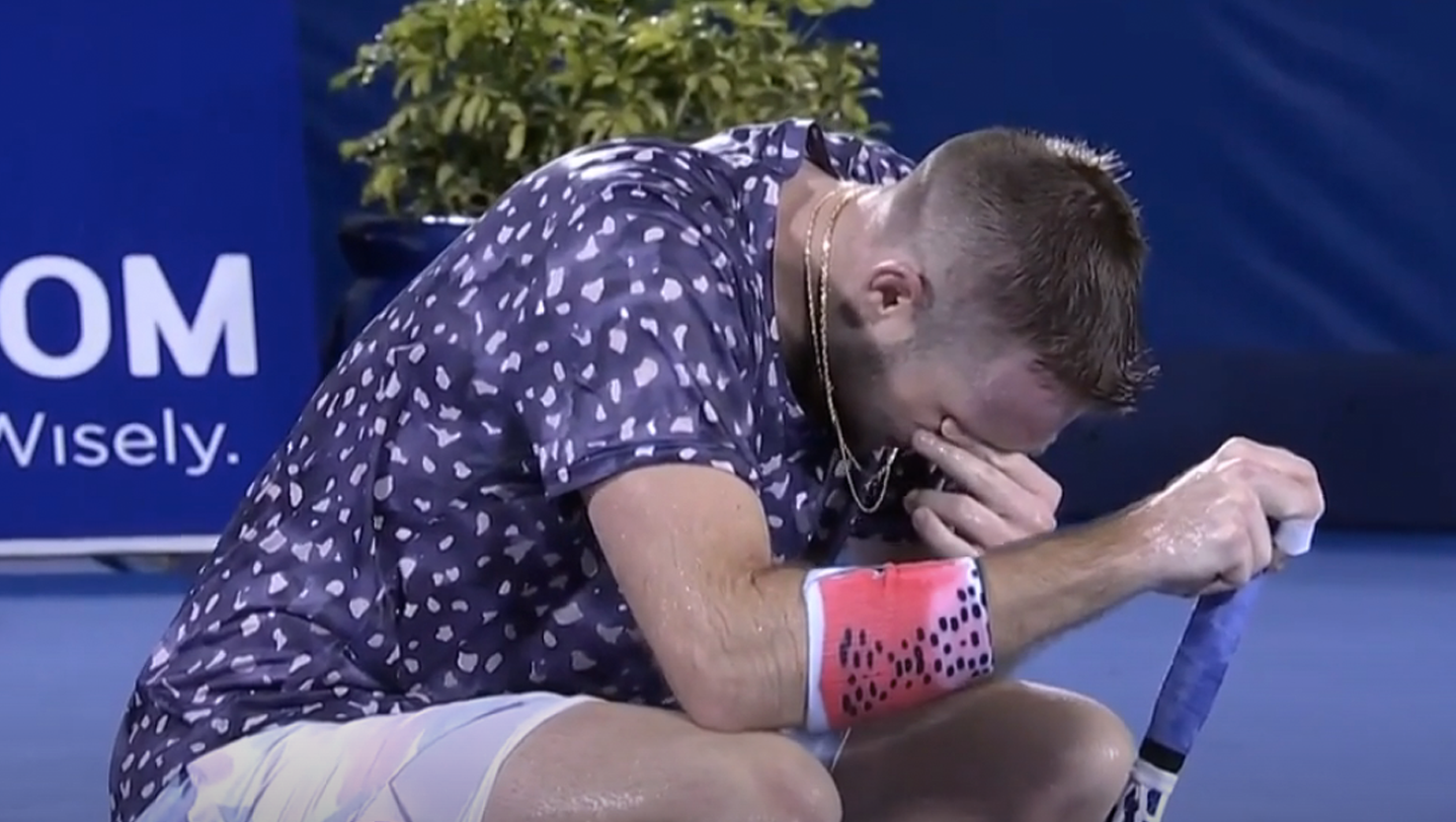
The result: a match exactly as ugly as the circumstances would suggest. Albot struggled with his shoulder and Sock struggled with this whole enterprise. But if you sifted through it, you could still find a few encouraging traces of the old Sock: flashy touch shots in the frontcourt, a 96-mph forehand beam down the line. The American fended off a match point at 5–6 in the third, won the breaker at 7–2, took off his hat, and wept. Then he shook hands, sat down, and kept weeping. It was not a watchable win, not a win that foretold more wins, but it was a win, full stop, and Sock took it in like someone who knows not to take wins for granted.

And he’d lose the next one at Delray to countryman Steve Johnson, in three sets. This week, looking ahead to Indian Wells, Sock announced a reunion with an old fave: the Canadian Vasek Pospisil, his partner in winning Wimbledon unseeded back in 2014, plus Beijing and Indian Wells in 2015. Because neither has won much doubles lately, the duo isn’t even guaranteed to make the draw, but they’ve made the finals there as recently as 2016 and probably have enough narrative appeal to snag a wild card. Maybe getting back into this salad-days partnership can kick-start Sock’s doubles game and, in turn, his once-promising singles career. Failing that, he can always just try a shot of maple syrup.

Stay in touch

Sign up for our free newsletter

More Stories

Is it OK for a Player to Disappear?

The conversation around mental health has helped transform the sport, but as openness becomes the norm, another question is beginning to surface: Can vulnerability remain meaningful if athletes no longer feel free to withhold it?

July 14, 2026

Postcard from Wimbledon: Practice Is a Privilege

In this letter of recommendation, our correspondent reports from the All England's Aorangi Park, where the press can sit and absorb a sense of wonder and astonishment and porous, melancholy outsiderness. Where we are reminded, after all, that we are mere witnesses to these shapes and strokes of beauty, and not their arbiters.

July 6, 2026

How Wimbledon Stays Elite, but Not Elitist

Wimbledon Court is the All England Lawn Tennis Club’s effort to give New Yorkers the chance to play on a rare surface in the city’s backyard. It’s also part of a larger effort to ensure the tournament delivers on its promise of “the pinnacle of sport” and broadens the tennis fanbase to the next generation.

June 29, 2026

Postcard from Mallorca

The racquet-sports draw to this Balearic gem is no longer for rabid junior prospects only—now it’s the grown ups with a taste for design hotels, regional hospitality and a seamless itinerary of sport and wellness who are recalibrating the island’s racquet-sport vibe.

June 28, 2026

The Art of Staying Present

A Canadian artist finds inspiration on Texas tennis courts

June 26, 2026

Spoils Rotten (and Good)

The Best and Worst Trophies on Tour

June 17, 2026