

Skip to Content
Newsletter

Sweet Dreams to Rafa’s Foot

[vc_empty_space height="5px"]

By Giri Nathan
Photos by James Hill

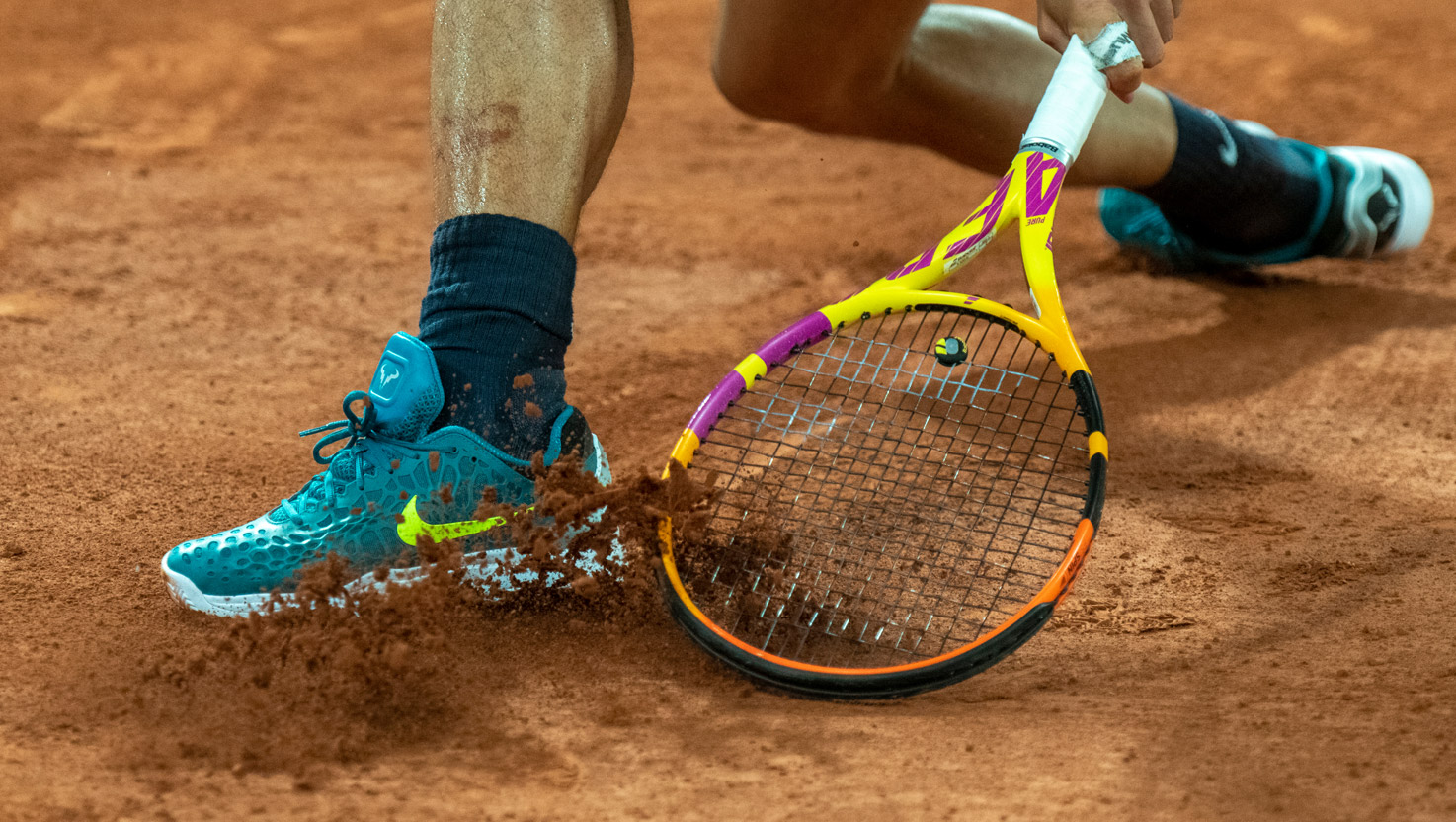
[vc_empty_space height="15px"]I’ve run out of novel ways to celebrate the glory and inevitability of Rafael Nadal at Roland-Garros. I don’t think there are many feats in sport like it. I’m on the record as believing there will be nothing like it, ever again, in the men’s game. Of course, I said that before I knew of the existence of Carlos Alcaraz, who now seems intent on getting my foot in my mouth. But while we’re on the subject of a foot, we have to consider Rafa’s left one, which became the defining story of this 14-title run in Paris—and which has, despite his usual dominance in the score lines, made that title seem a little sweeter and scarcer than ever before.

Nadal has fended off questions about it all year, but whenever he feels the time is right, he offers an honest update. And to be clear, the foot is nothing new. It’s a diagnosis exactly as old as his reign at the top of the game. In 2005, the year Nadal won his first Roland-Garros title, he was diagnosed with Mueller-Weiss syndrome, a degenerative condition of the navicular bone. He has managed the pain with orthotics in his shoes and a steady regimen of anti-inflammatories. But in the twilight of his career—can we call it that when he’s won the first two Slams of the year?—the pain has intensified. After Roland-Garros in 2021, he limped out of the premises, and said he kept limping for the next two and a half weeks, the foot effectively ending his season. This May, he limped off the court in Rome in a three-set loss to Denis Shapovalov. Between an earlier stress fracture to his rib, and this recurring foot pain, it was the first time since 2004 that he entered Roland-Garros without having won a clay title in the lead-up. His status in Paris was a question mark.[vc_empty_space height="15px"]

nad38

[vc_empty_space height="15px"]The question was answered in the affirmative, match after match, even when competition got dicey in that second week. He survived a severe five-set test against Félix Auger-Aliassime; temporarily raised himself to vintage quality as he dispelled Novak Djokovic in a four-set quarterfinal; lucked out a bit when Alexander Zverev crashed out of their semifinal with an ankle injury; and rolled Casper Ruud in the championship bout. Winning the clay Slam is a physical gauntlet even when coming in with perfect health. It’s unimaginable when experiencing the kind and degree of pain that Nadal has described. In press after, he revealed how he managed it:

“I have been playing with an injections on the nerves to sleep the foot, and that's why I was able to play during these two weeks, no, because I have no feelings on my foot, because my doctor was able to put anesthetic injections on the nerves. That takes out the feeling on my foot,” he said.

He won Roland-Garros with his foot asleep. While he acknowledged that the loss of sensation creates the risk of an unrelated injury, like twisting the ankle, he saw it as an acceptable compromise to vie for this title. He said he got injections 20 minutes before getting on court, that it wasn’t an “exact science” and the location of the numbness would vary from day to day, lasting for seven or eight hours. In the final, his toes fell asleep, and he lost some feel. (Don’t tell poor Casper how the score line might’ve looked if Rafa was able to feel his toes.) But it’s a short-term fix, not a permanent one. That’s what he’s seeking this week, through pulsed radiofrequency treatment. The goal is to “burn” the nerve and achieve the same pain-free state that the injections induce, on a more permanent basis.[vc_empty_space height="15px"]

rafzver06

[vc_empty_space height="15px"]“If that works, I gonna keep going. If that not works, then gonna be another story. And then I gonna answer to myself, I gonna ask to myself about if I am ready to do a major thing without being sure that the things are going the proper way, for example. A major surgery that don’t guarantee me to be able to be competitive again and it gonna take a long time to be back,” he said after winning the final, with his usual calm and calibrated optimism. “So let’s do step-by-step, as I did all my tennis career. Next step is that. After that, let’s see how it works.”[vc_empty_space height="15px"][vc_column width="1/6"][vc_tweetmeme share_via="racqetmagazine"][vc_column width="1/6"][vc_facebook type="button_count"][vc_column width="1/6"][vc_column width="1/6"][vc_column width="1/6"][vc_column width="1/6"][vc_empty_space height="45px"][vc_column width="1/4"][vc_column width="1/2"]

NOW AVAILABLE
Issue No. 19

racquet_issue-19

[vc_btn title="BUY NOW" style="outline" shape="square" color="success" size="lg" align="center" button_block="true" link="url:https%3A%2F%2Fracquetmag.com%2Fproduct%2Fissue-no-19%2F|title:GET%20IT%20NOW||"][vc_column width="1/4"]

Stay in touch

Sign up for our free newsletter

More from Racquet

Postcard from Egypt: I Turned a Vacation into an ITF

One 37-year old former D3 player trying to stay fit while traveling with her husband and toddler gets carried away and enters a pro tournament at the encouragement of her hotel pro. What could go wrong?

May 1, 2026

Michael McGregor’s Tennis Love Story

The vibrant and idiosyncratic still lifes—often composed on hotel stationary—are the work of artist Michael McGregor, whose roots in a “huge tennis family” inform one of his favorite themes.

April 28, 2026

Pàdel Shots: a Lexicon

A by-no-means-exhaustive list of the names and neologisms that define a new(ish) sport

April 27, 2026

Why Everyone You Know is Playing Padel

Many sports like to claim that they’re the fastest-growing, and they often have a legitimate claim to the title, depending on how you measure it. But, by almost any yardstick, pàdel really is the world’s fastest-growing sport.

April 27, 2026

Have Pàdel Will Travel

The hottest clubs around the world don’t feature EDM dance floors or after-hours speakeasies. They’re racquet-centric, they’re wellness-affiliated, and they’re taking advantage of the fastest-growing sport on the planet. Welcome to the global network of pàdel.

April 27, 2026

Pàdel Party in the U.S.A.

Pàdel is about people. Whether you play competitively and want to win, or play socially and need a reason to wear that outfit, it revolves around coming together as a team to make all the different reasons come to life.

April 27, 2026
See all posts