

Skip to Content
Newsletter

Tennys Sandgren Sheds The Virus, Heads Down Under

[vc_empty_space height="5px"]

By Giri Nathan

[vc_empty_space height="15px"]Australia’s pandemic response has been an admirable success, thanks to extensive contact tracing, widespread compliance with guidelines, and natural advantages—low population density, that whole island thing where you’re surrounded by water on all sides. As of mid-December, Melbourne had gone four weeks without a new COVID-19 case. Hosting its usual Grand Slam could only endanger its slow move toward normalcy. Just last week, the Australian federal government nearly halved the number of Australian citizens allowed back into the country each week, as a precaution against more infectious strains of the disease. Caps on hotel quarantine have left tens of thousands of Australians stuck abroad. Meanwhile, Tennis Australia prepared to charter 15 flights containing 1,200 players and officials into the country so that the tennis could happen. Execution aside, the optics were already tricky.

But Tennis Australia’s plan appeared to take every possible precaution for an undertaking as inherently risky as an international sports event. The Open was pushed back a few weeks to Feb. 8 to accommodate the necessities of both health protocols and tennis training. All players would have to return a negative test before flying to Australia, then enter a 14-day hotel quarantine upon arrival. Tested daily, permitted just five hours a day outside the hotel room for training purposes. After that fortnight, they would move on to the warm-up events, and then the Open.

The plan looked clean on paper. Now that this process is underway, we’re seeing bits of the messy reality. Andy Murray stayed put in the U.K. after a positive test result, apparently still hopeful that he will eventually make it to Australia somehow; who knows how many of these he has left in the tank? Madison Keys said she skipped her flight out of the U.S. after a positive test result, and it’s unclear if she still intends to travel there by other means. And, most curiously, Tennys Sandgren live-tweeted his own saga. He wrote that he recovered from a spell of COVID-19 in November, but tested positive again ahead of his flight, and cast doubt on the value of PCR testing. (American men’s tennis players always stay on brand! Sometimes even at great personal expense, as Christian Harrison proved this week in Delray Beach by refusing a mandatory on-court interview that required him to wear a mask, and getting fined $3,000.)

Sandgren’s next dispatch offered a glimmer of hope that he could board the flight, before disclosing that he could hold his breath for three minutes and 31 seconds, which is genuinely cool. By the next tweet, he was boarding the flight, 15 minutes after it was supposed to depart, before his bags had even been checked. And then he was off, with praises to “wizard” Craig Tiley, who is the CEO of Tennis Australia. 

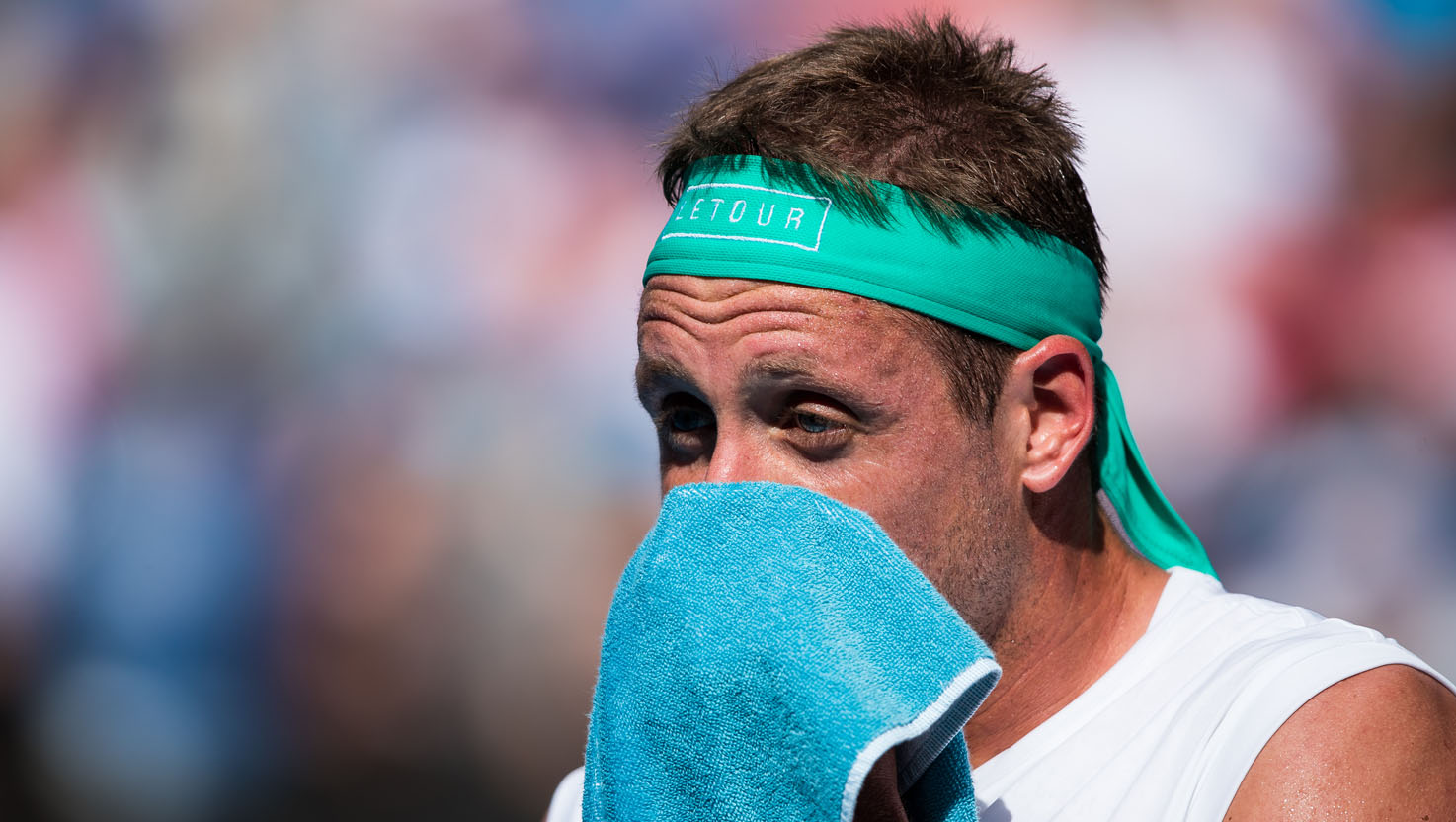
Because it is tough for me to assess a situation based on the real-time commentary of a Pizzagater in the process of frantically boarding an airplane, I had to wait until this helpful story in The Guardian to grasp what had transpired. Authorities in Victoria, the state Melbourne is in, reviewed Sandgren’s medical history and approved Sandgren’s air travel despite his positive test. Per a spokesperson for the state’s COVID unit, someone who is no longer infectious can nevertheless continue to “shed” the virus for months after the fact, which could have accounted for Sandgren’s positive test result. So: less to do with Tiley specifically and more to do with the virology. With the first and most logistically complex hurdle now cleared—transporting people to Australia—we will see how players and their staff handle the most extreme quarantining procedures they’ve experienced on tour to date. Should that all go smoothly, two-time quarterfinalist Sandgren will be back on court at the Australian Open, so prepare for the annual ritual where Tennys lasts two rounds longer than one might expect, the mainstream press realizes that there’s a tennis player named Tennys and revels in this fact, and then Tennys loses and is forgotten to time until his next trip Down Under.[vc_empty_space height="10px"]Above: Despite a positive COVID-19 test, the Pizzagater was ruled non-infectious and allowed into Australia. (Getty) [vc_column width="1/6"][vc_tweetmeme share_via="racqetmagazine"][vc_column width="1/6"][vc_facebook type="button_count"][vc_column width="1/6"][vc_column width="1/6"][vc_column width="1/6"][vc_column width="1/6"][vc_empty_space height="45px"][vc_column width="1/4"][vc_column width="1/2"]

Men’s adidas x Racquet Defiant Generation

racquet_adidas-defiant

[vc_btn title="GET IT NOW" style="outline" shape="square" color="success" size="lg" align="center" button_block="true" link="url:https%3A%2F%2Fracquetmag.com%2Fproduct%2Fadidas-x-racquet-defiant-generation%2F|title:GET%20IT%20NOW||"][vc_column width="1/4"]

Stay in touch

Sign up for our free newsletter

More from Racquet

Postcard from Egypt: I Turned a Vacation into an ITF

One 37-year old former D3 player trying to stay fit while traveling with her husband and toddler gets carried away and enters a pro tournament at the encouragement of her hotel pro. What could go wrong?

May 1, 2026

Michael McGregor’s Tennis Love Story

The vibrant and idiosyncratic still lifes—often composed on hotel stationary—are the work of artist Michael McGregor, whose roots in a “huge tennis family” inform one of his favorite themes.

April 28, 2026

Pàdel Shots: a Lexicon

A by-no-means-exhaustive list of the names and neologisms that define a new(ish) sport

April 27, 2026

Why Everyone You Know is Playing Padel

Many sports like to claim that they’re the fastest-growing, and they often have a legitimate claim to the title, depending on how you measure it. But, by almost any yardstick, pàdel really is the world’s fastest-growing sport.

April 27, 2026

Have Pàdel Will Travel

The hottest clubs around the world don’t feature EDM dance floors or after-hours speakeasies. They’re racquet-centric, they’re wellness-affiliated, and they’re taking advantage of the fastest-growing sport on the planet. Welcome to the global network of pàdel.

April 27, 2026

Pàdel Party in the U.S.A.

Pàdel is about people. Whether you play competitively and want to win, or play socially and need a reason to wear that outfit, it revolves around coming together as a team to make all the different reasons come to life.

April 27, 2026
See all posts