

You didn’t need to know her name because you already knew what she was wearing. According to a Sports Illustrated profile, French tennis star Suzanne Lenglen, dubbed the “lady in the white silk dress,” did everything in head-to-toe Jean Patou: “drank, swore and had lovers by the score—and played tennis incomparably, losing once in seven years.” Patou was a pioneer in sportswear, designing jersey sets that allowed the wearer to move freely. He sent Lenglen, his muse, out onto the court in long dresses, low necklines, short sleeves, and pleated skirts that hit her right at the calves. Although tame and overdressed by today’s standards, it was scandalous for her Wimbledon debut in 1919.
The strict dress codes in tennis stem from its country club and royal origins, and it’s always been a source of friction for outsiders. Arguably, it’s what’s made some of the most iconic on-court looks stand out decades later. Most of them broke the same dress codes dating back to Lenglen’s time. Who could forget Andre Agassi, with a bronde mullet and acid-washed jean shorts at the US Open? Or Venus Williams getting a hindrance call after a bead fell out of her hair? Or sister Serena causing a stir in a compression catsuit at the French Open? Notably, Jannik Sinner needed special permission from the All England Club and the ATP tour to bring a monogrammed Gucci duffle bag to Wimbledon. As Agassi explained to Esquire, many of his own looks, like these, stand the test of time because they’re “statements of rebellion and anti-establishment.”

What makes them even more remarkable is that they’re as functional as they are fashionable, allowing athletes to perform at a high level. Professional tennis has evolved beyond its leisure class roots. It’s now grueling and fast, with some players cranking out 150 mph serves, and matches going on for hours in extreme heat. I’ve been intrigued by tennis stars that have elaborately designed kits that can withstand these conditions. Back in September, Woolmark announced that Venus Williams was making her return to the US Open in a “groundbreaking Merino wool performance kit designed by LUAR.” Recently, Naomi Osaka won the Australian Open in a collaboration with couturier Robert Wun and Nike. What made that possible? The short answer is a strategic mix of design and technological advancements, but that connective tissue is textile innovation.
I asked designers, textile specialists and sportswear manufacturers how textiles make tennis gear go pro:
How does the design process start?
Annette Steingass, Senior Director at adidas Specialist Sports: We go through a series of considerations in terms of what the item is going to be used for, and then map out our design process against those. For example, which conditions are they set to play and wear the product in? Fabric will come into the discussion quite early on, but as that first-port-of-call, we use the key silhouette of our existing tennis apparel (t-shirts, skirts etc.) and then look at what additions, reductions, new features etc., we can apply, to provide the very best for that athlete, in that moment.
Mason Stock, Head of Sourcing at atsource: This is a bit of a chicken‑and‑egg question, and it really comes down to the process of the brand. Ultimately, all products start as an idea, and all collections begin with market research and product ideation. From there, we typically start sketching out rough concepts for the garments in a collection, noting their features and functions, and then begin introducing fabric swatches to guide decision making from a textile perspective. At the same time, we attend a lot of fabric trade shows each year, like Performance Days, where fabric mills showcase their best‑selling textiles and new developments. Sometimes you come across a unique fabric or technology that sparks an idea for a product, and in those cases, you can actually work backwards from the textile.
Alexander-John (Talton Alexander-John Ballard has worked with sportswear brands like New Balance and Puma, and previously designed Taylor Townsend’s on- and off-court kits): My job with any client is to think about how they can show up without saying anything. What clothing are they wearing? What does it say about them, and will it trigger a response or a conversation? When I designed Taylor Townsend’s kits, she didn't have a voice, and so we were going to give her one through her clothing. We wanted to make people understand her game, see the themes she lives by without saying a word. This allowed her to be heard in interviews because her clothing supported her messaging. It was those things that I was really trying to highlight in the design. We were very intentional about how she looked moving, especially when she was going to slash, or how it would all come together in a photograph.

Sarah E. Braddock-Clarke, senior lecturer and researcher in Fashion Design and Performance Sportswear at Falmouth University: I know that everyone works in different ways, but I think most designers, be it fashion or sportswear, start with the fabric, drape it, and look at how gravity responds to it. They’ve got to ask themselves what they want the material to do, and find ways, either through the yarn or the way that it's constructed, to make that possible. For instance, stretch and recovery are really important for athletes because if they’re performing a particular movement, then they need the fabric to come back to where it should be on their body. They need that ability of the fabric to slide over the body and not ride up where it shouldn't. Designers would typically need something that's got a really high twist, because it’s going to be alive, more elastic, and have that recovery built in.
What are the best fabrics, textiles or materials for pro tennis players?
Steingass: We’ll go through a series of testing and development sessions, where we’ll heat-map key areas on the body that require additional stretch (under the armpit, for example) or where we can apply perforated zones for increased airflow. We’re looking at where our athletes need more mobility and breathability to optimize comfort and freedom of movement when playing tennis specifically. At the highest level of elite performance, our focus is on creating only the best for the athlete to support their performance needs, which leads to use of materials with higher sweat-wicking and quick-drying properties. Ultimately, the fabric has to feel good between the athlete’s hands, and then on the body, before we continue to move forward to develop it further.
From a design perspective, we also must consider colorways and patterns. What suits a particular court color for that slam? How do we abide by a tournament’s dress code while still meeting our high standards of performance and design?
Stock: The core principle in functional apparel is “form follows function,” and that’s especially true for the fabrics we choose. Most athlete uniforms remain synthetic‑dominant, and for good reason: cost, performance, durability, etc. Synthetics like polyester and spandex are cheap and easy to produce; they genuinely deliver on performance. Polyester wicks sweat away from the body, keeping athletes dry and cool, while spandex gives that stretch and recovery that’s essential for movement and compression.
Modern kits need to stay light when soaked, resist clinging, hold their fit under constant stretch, and cope with heat and UV over multi‑hour matches. That’s why today’s tennis uniforms are almost entirely synthetic or synthetic‑rich blends: they’re simply better at managing sweat, maintaining shape and surviving the wash cycle than the old pure cotton kits ever were.
Venus Williams recently made headlines for a Merino wool kit at the US Open; this was exceptional rather than typical, and it was worn during an exhibition match, not in main-draw competition. When it comes to Merino, the reality is that there are levels to it, and the cost‑effective stuff can be itchy and lack the performance benefits of premium grades. The super‑fine, best‑quality fibers typically get scooped up by luxury fashion houses, so securing access to premium Merino is expensive and difficult.
Braddock-Clarke: I've seen a swing towards fibers and fabrics that are high-stretch, that will compress the body, and make it sleeker. In terms of sports, athletes can get cramps that are very debilitating, and so a lot of the really high-stretch we're talking about, say 20% Lycra or spandex in a blend, gives them muscle compression, and that helps to stop cramping.
Tennis is played year-round, meaning there are different weather conditions and court surfaces to consider. What do you have to tweak after these considerations?
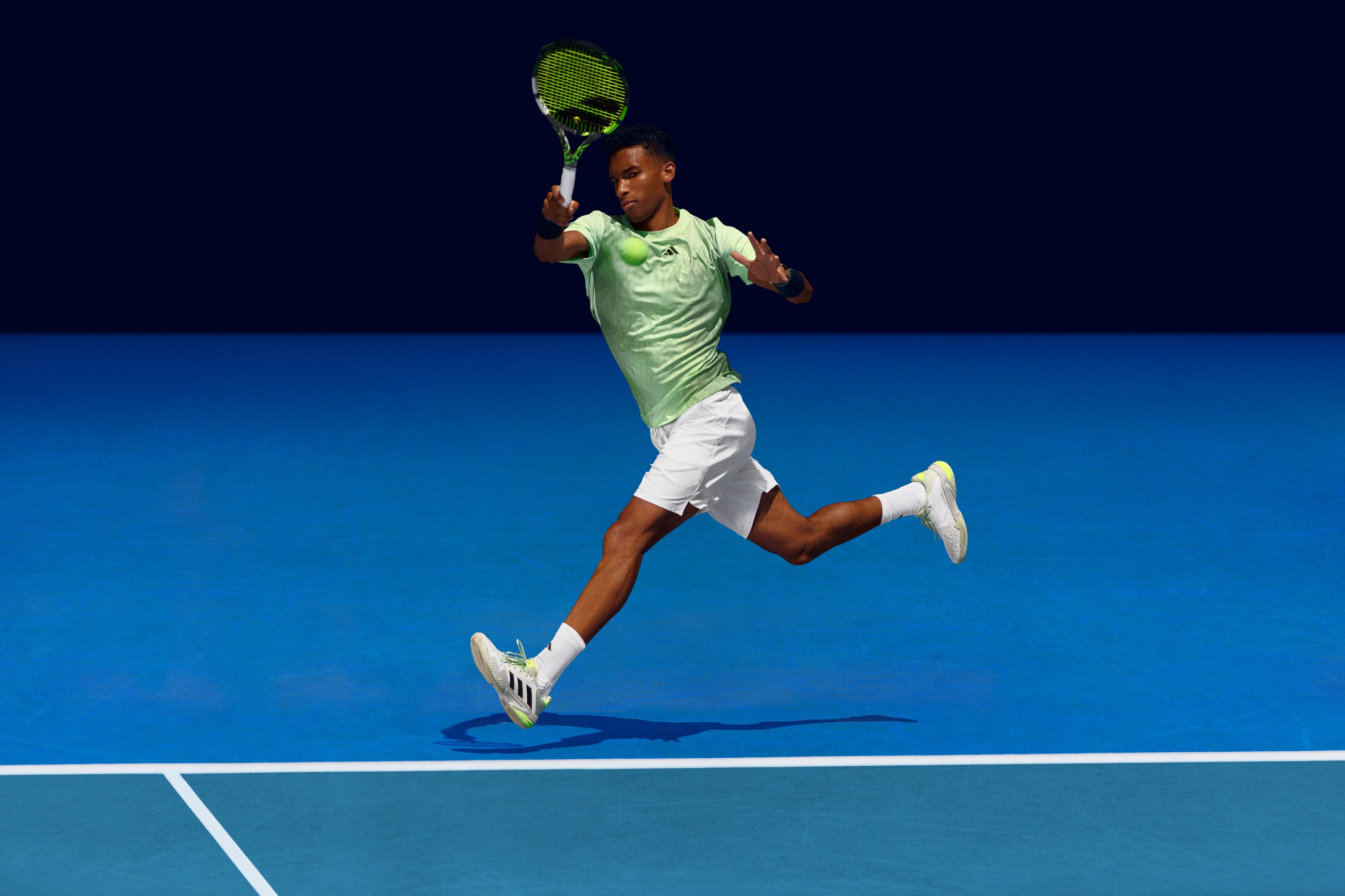
Steingass: For apparel, we must consider the different weather conditions that our players perform in and the different ways in which we can help them feel comfortable in countries with higher temperatures. For example, in our 2024 Melbourne Collection, we featured AIRCHILL material technology across the apparel range. This tech supports cooling through raised pattern motifs and mesh layers which is useful for the heat. For this year’s collection, we also included CLIMACOOL+ in some pieces, which involves more advanced materials that are engineered with fast-dry fibers for better cooling and airflow.
Another key consideration is the surface. For clay courts, the choice of base colors is really important, as lighter colors absorb and highlight the many clay stains that can occur across a professional match. That is why our clay collections tend to lean in bolder, darker colors: these clay marks show up less prominently.
Stock: The more you understand the athlete, their body, the environment they perform in, and their specific performance demands, the more precisely you can develop a product that’s truly fit for purpose. That’s how great sportswear is made.
The first thing to consider is fabric weight and breathability. For hot, humid conditions you’re looking at lighter fabrics, more open-knit structures and more airflow built into the pattern: things like mesh back panels, wider armholes, or slightly looser fits so heat can escape. In cooler or windier environments, you’ll bring in slightly heavier knits, maybe fabrics with brushed interiors, or add long‑sleeve and mid‑layer options that trap a bit of warmth without feeling bulky or restricting the swing. We might then explore fabrics with UPF 50+ sun protection so athletes can focus on the match, not how often they need to reapply sunscreen to their arms.
You also have to think in layers rather than single outfits. A player might warm up in a jacket and pants, strip down to a sleeveless top, then throw something back on between sets. All of those pieces need to be easy on and off and still look cohesive as a system. So you end up building a toolkit of silhouettes and fabrications, tanks, tees, long sleeves, shorts, tights, skirts, light outerwear, etc., that can be mixed and matched around the same visual identity to keep the athlete in a comfort zone all season, across all conditions.
Tennis is also a single-player sport. Does this make it more or less challenging (versus designing for a team)?
Steingass: You must think differently about the design story. When designing for a team, you can often lean on national or local pride and history, paying homage to that with iconography, or nods to the history. With individuals playing for themselves, you have to look at more than that. So, alongside focusing on the individual styles and preferences of our athletes, we also look at the surface they are playing on, the theatre in which the tournament will take place, the city, and even the national landscapes for inspiration. It must be a design story that players and fans can connect with, while not being too unique.
Stock: It also brings a level of clarity to the design process. Team uniforms often have to compromise—especially on fit, because they need to work across a wide range of body types. When dealing with individual sports, you’re not trying to please a squad of players and a club with a budget; you’re designing for one athlete’s body, preferences and style of play. That allows for much more freedom and user‑specific product development. You can dial in details like fit, fabric weight, pocket placement, or sleeve length around how that player moves and what they experience during play.
Alexander-John: Whenever you’re a designer, especially for tennis, you need to understand that you’re a psychologist in some ways. You create clothing that encourages a player because they’re alone out there. For me, it would involve adding design elements, like hiding a small dinosaur somewhere for Taylor, so she could be reminded that her son, who loves dinosaurs, is waiting for her. I always approached the design as a way to support her and help her handle this crazy task. Playing a sport alone in front of a crowd that could be clapping for you or booing you—that causes a lot of mental strain. We've watched a lot of tennis players go through breakdowns. They've taken breaks, you know? So I was like, okay, not on my watch! I wanted to create this space so she could focus on playing and being the best.
One thing that was different about working with Taylor is that I also helped design her logo [Townsend has been playing without an official kit sponsor since 2017, when her Nike contract wasn’t renewed. She started developing her own namesake brand with Alexander-John last year]. I wanted it to look as strong as she was—to show what she had done in the sport while being a mother. We didn’t want anything frail; she has been through the wringer mentally. So I wanted to go bold. We played with shapes, her initials (TT), and the tennis court logo. She’s also a fashionista who loves luxury goods, so I wanted to create a logo that kind of mirrored what you would see from a Tom Ford. Taylor's line actually changed the landscape of how you started seeing some of the players show up. Prior to Taylor, nobody had their own names on their kits—maybe on their bag, but that was about it. Now we're watching certain brands put the actual athlete's name on their on-court kits. That’s what the goal was: to bring her personality into the game.
1.It’s said that Patou invented the swimsuit and tennis skirt. (And the sportswear industry.)
2. Lenglen won that year, and the next four, by the way.
3. The tennis catsuit was supposed to help Williams with circulation after a near-fatal pulmonary embolism during childbirth. It was banned by then-French Tennis Federation President Bernard Giudicelli, who deemed it disrespectful.
4. Wimbledon notoriously has a rigid barely-there logo and all-white policy (we’re talking stark white; not cream, bone, or Cloud Dancer).
Sara Black McCulloch is a writer from Toronto. She has written for The Believer, The Walrus, and SSENSE.


