Skip to Content
Off Court

BNP Paribas and the Future of Tennis

8:54 AM EDT on April 8, 2022

[vc_empty_space height="5px"]

By Caitlin Thompson

After the 2020 cancelation, the 2021 delay and a restricted in-person audience, the 2022 BNP Paribas Open at Indian Wells was a triumphant return of the storied “fifth slam,” with record-breaking crowds in attendance, exhilarating matches for them to watch and fresh faces hoisting trophies at tournament’s end. As the title sponsor since 2009, the French bank has been working harder than ever both in front of the cameras but also behind the scenes to use their flagship US event to promote initiatives in social equity, sustainability and community responsibility—for the betterment of the sport.

When we last spoke to BNP Paribas USA CEO Jean-Yves Fillion on on The Racquet Network’s Rennae Stubbs Tennis Podcast last Fall, his comments about envisioning the future of tennis became one of our most discussed episodes—so naturally we invited him back. As we like to say at Racquet, tennis has been on the right side of history more often than it hasn’t, and we’re thrilled to showcase leaders and conversations that continue to make the sport more just, equitable and impactful.

At a gathering in the BNP Suite at Indian Wells Tennis Garden, Fillion joined a diverse crowd of musicians, artists, creators and athletes in a discussion hosted by Rennae Stubbs to record a live episode of her namesake podcast and discuss how our sport—and its changemakers—can lead by example.

Fillion opened up his remarks by talking about how becoming a sponsor of the tournament in 2009 gave BNP Paribas the opportunity to dream big about how to shape the sport and put an onus on the tournament to share the ideals of the bank, something he felt both from a business standpoint and also personally.

Most important, he said, is to start: “I’m French, and nobody’s perfect,” he said, “but I’ll see if I can do something.”

The first and most obvious place to shape tennis’ future is supporting the next generation of tennis talent. In 2019 this meant deeping BNP Paribas’ relationship with the John McEnroe Tennis Academy to create Team BNP Paribas Mac 1, a program where promising young players get financial support to reach the next level—including training and access to the most competitive tournaments in the Americas. Fillion explained how this program came about and how its priorities reflect the future the sport needs:

“It had to have three dimensions to me: First, kids have to stay with their families. New York City kids who are training don’t [move] across the country, they need to be able to stay with their families and their community,” he said “Second, the plan is to train excellent players with the best coaches and training with Patrick and John [McEnroe] fully involved. Third concept: education. Education is critical—they have to be good at school, they have to work hard, and if they don’t deliver at school they can’t participate in the program. We look at deserving kids… meaning kids who cannot afford this kind of training. We provide half a million dollars each year for 10 kids, and it pays for training, for traveling and for coaching.”

Fillion sees the bank’s relationship with the tournament as the biggest platform imaginable to give priority to the bank’s endeavors.

“There’s so much we can do to leverage tennis, including this tournament, to really focus on committing to the community’s equity, the social dimension, access, as well as sustainability.”

The Aces for Trees initiative, where every ace at the tournament means the bank plants a new tree—has only gotten expanded in the past year since the program’s inception.

“This one started with the bank—beyond California, worldwide—trying to fight deforestation,” said Fillion. “We started with this concept that each ace in the tournament, we would plant a tree. Last year, we planted over 3,000, and this year we’ve committed to plant three trees per ace. We’ll have a lot more in 2022 than we had in 2021.”

“Reilly Opelka is playing as we speak,” said Stubbs, “and I certainly expect him to help you out with that. I love how you are working with some of the players—Felix Auger-Aliassime is involved with his efforts to create leadership and donation related to points won in a match.”

“We love to work with someone who leads, someone who believes in something and we try to accompany and support,” said Fillion. “Felix had the idea to give $5 per point he wins to an organization called CARE,” he said “They raise funds to protect children in Togo (Africa), the country where his father is from, to protect them from violence and give them education. We triple match what he gives, so he gives $5, we give $15. We do this worldwide and it creates an impact.”

Fillion said the responsibility the bank has to represent diversity is partially related to its global footprint:

“When you have a presence in 72 countries, how can you not be diverse and understand that diversity is your main asset?” he said. “I think that’s something tennis embodies, and that has tremendous value to me and that’s what the bank is about.”

“Racquet is trying to push tennis forward, to make it more diverse and broaden its appeal,” said Stubbs “How do you at BNP Paribas see the future of tennis?”

“Never stop going faster, pushing harder—one of the examples we look for is equal pay. That was an easy concept to grasp and to change when we got involved with the tournament in 2009. I happen to be the father of three daughters so I have no options,” said Fillion. “To me we would get involved in the tournament under the terms of equality, diversity and sustainability. Those values and ideas are resonating in what we are trying to do—and we’re just getting started”

“Tennis has been on the right side of history—with race, with gender, with LGBTQ+ inclusion—more often than it hasn’t,” said Stubbs. “How do we get other sports to follow the example?”

“We lead by example,” said Fillion. “If you do something right and you communicate, then particularly in the world today, it resonates. Tennis is so well appreciated worldwide, so you can have this contagious effect. When we look forward to what this tournament will be in the future, I want it to speak to these things.”

If the trajectory of BNP Paribas Open is any indication, the future of the sport as a whole is certainly promising.

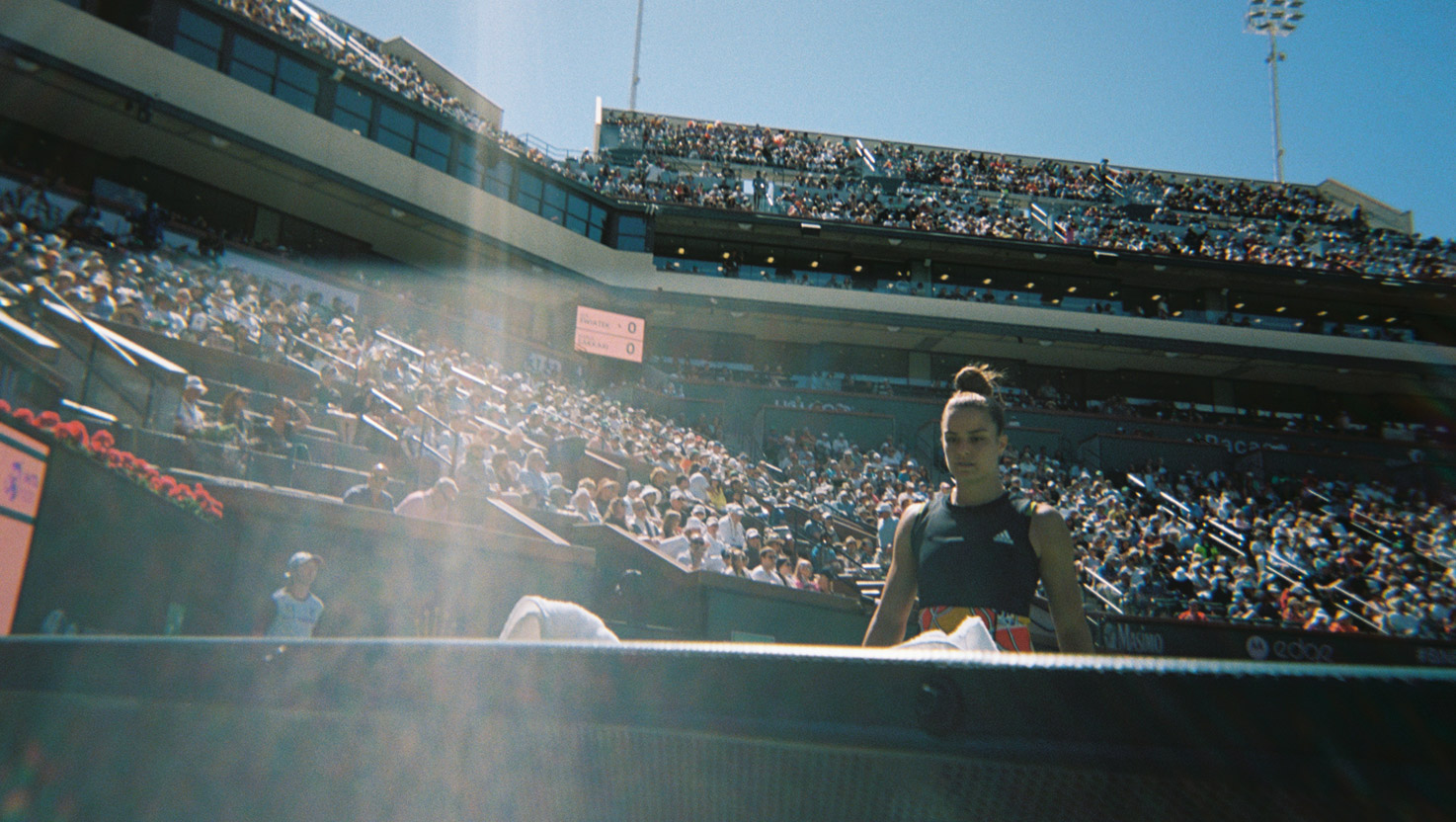
Above: Maria Sakkari, Matteo Berrettini, Felix Auger-Aliassime and Emma Raducanu at Indian Wells. (David Bartholow)[product_mod id="871"]

Stay in touch

Sign up for our free newsletter

More Stories

Racquet’s Guide to Los Cabos

When you bring your racquet to Los Cabos, you discover a travel experience where tennis meets the sea, the desert and a vibrant Baja culture—a perfect blend that’s made the Mifel Tennis Open by Telcel Oppo an unmissable stop on the ATP Tour for ten years running.

July 20, 2026

Fit(s) For a Queen

The Serena Williams Fit-Dex is hands-down the best use of the internet.

July 16, 2026

Is it OK for a Player to Disappear?

The conversation around mental health has helped transform the sport, but as openness becomes the norm, another question is beginning to surface: Can vulnerability remain meaningful if athletes no longer feel free to withhold it?

July 14, 2026

Postcard from Wimbledon: Practice Is a Privilege

In this letter of recommendation, our correspondent reports from the All England's Aorangi Park, where the press can sit and absorb a sense of wonder and astonishment and porous, melancholy outsiderness. Where we are reminded, after all, that we are mere witnesses to these shapes and strokes of beauty, and not their arbiters.

July 6, 2026

How Wimbledon Stays Elite, but Not Elitist

Wimbledon Court is the All England Lawn Tennis Club’s effort to give New Yorkers the chance to play on a rare surface in the city’s backyard. It’s also part of a larger effort to ensure the tournament delivers on its promise of “the pinnacle of sport” and broadens the tennis fanbase to the next generation.

June 29, 2026

Postcard from Mallorca

The racquet-sports draw to this Balearic gem is no longer for rabid junior prospects only—now it’s the grown ups with a taste for design hotels, regional hospitality and a seamless itinerary of sport and wellness who are recalibrating the island’s racquet-sport vibe.

June 28, 2026