

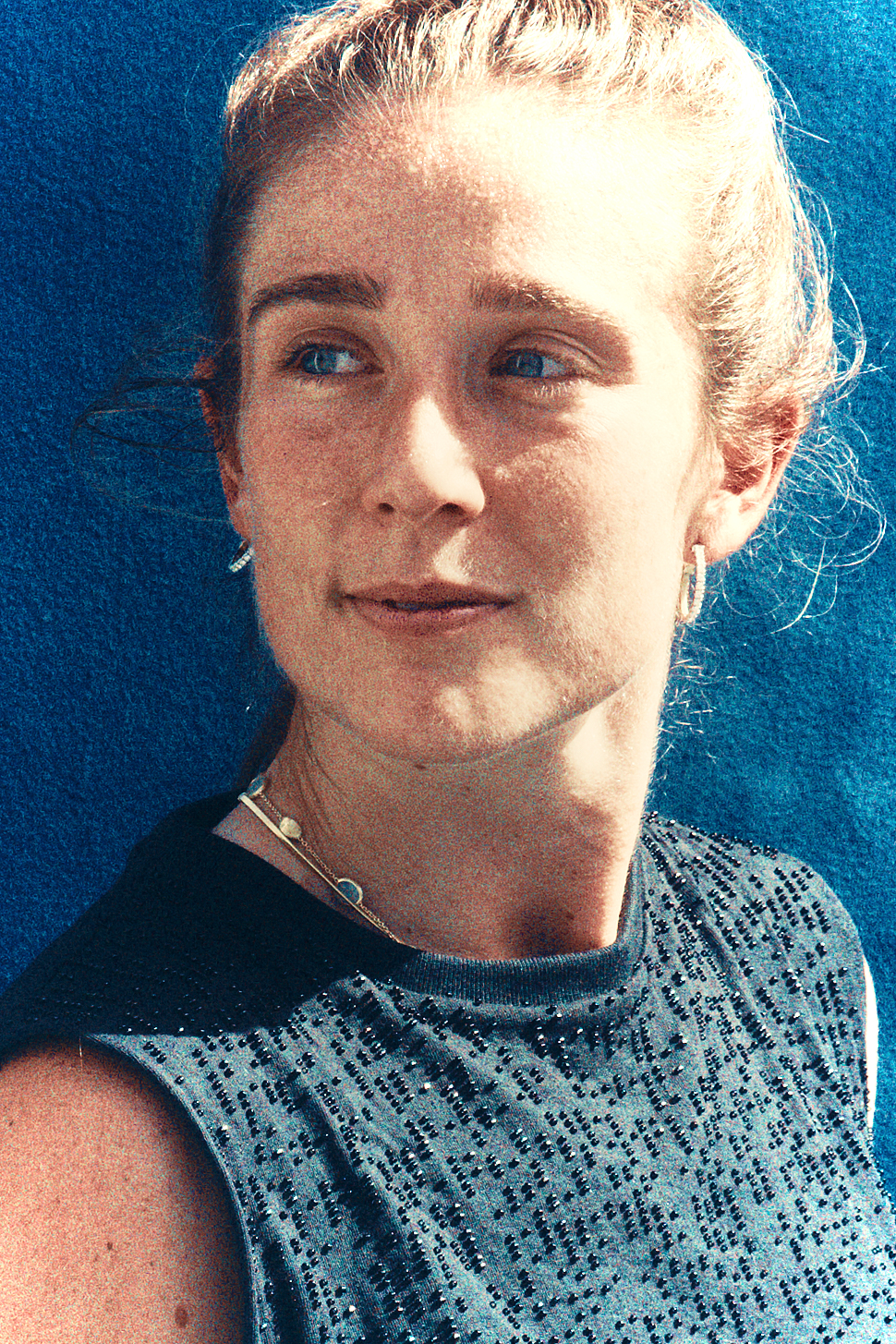
Racquet: Many pàdel players have a background in tennis; looking at your revés [backhand], you would think you played your whole life, but you didn’t—you played basketball! How did you get started in pàdel, and when did you know this was a potential pro career?
Martita: Thank you so much for that comment about my backhand. I'm really excited that you tell me it's similar to a tennis backhand. I love tennis, but I started directly with pàdel, although I usually play tennis in the summer or occasionally during the week. I started competing on the under-18 circuits at 10 years old. We had several tournament wins, and that got me hooked on competition and allowed me to try my hand at the professional circuit at a young age, at 15 or 16.
Racquet: How has pàdel's growth expanded the opportunity you think about as a pro athlete?
Martita: Pàdel continues to grow and grow, and that makes me immensely happy. We're going to play in places I never would have imagined, like the Philippe Chatrier in Paris and Roland Garros. It's true that the growth of the sport helps us grow in visibility and expectation, but I also think it's reciprocal, since today's players are also closely followed by the public.

Nowadays, it's super important to take care of yourself, train well, and rest, since, as you say, it's a sport for athletes, and every minute of rest and training makes a difference, due to travel, schedule changes, and changes in climate. We must always be as well prepared as possible.
R: You were part of this year's PPL tour—how does playing for a team differ for you from playing as an individual (especially one who has been ranked #1 individually). Any upsides and downsides to being on a team versus playing for yourself?
M: I've been part of the PPL since 2024, and I'm very grateful because I believe we're achieving the league's main objective, which is to promote our sport in the US. Team competition is a format that all of us players love because the feeling of playing for a team provides extra motivation. These types of tournaments, outside of the regular competitions we play throughout the year, are a moment of enjoyment and fun for us. We will always support these types of tournaments.
R: One of the hallmarks of your partnership with Adidas is the pink courts initiative, which raises awareness for breast cancer. Does it hit home for you as a woman in medicine? What are you hoping to bring to different communities with this campaign?
M: Adidas is an international brand that strongly supports women. For them, female athletes are the most important thing. The pink courts initiative is in line with that, with the female athlete movement. I'm proud to be part of such a large brand and to have been with them for over 13 years! They're like a family to me, and they're always thinking about contributing value to society, and that's very important to me. In addition to the pink movement, they also support recycling, the second life of plastics, and the non-pollution of oceans, etc.

R: Why did it take so long for America to figure out that pàdel is incredible? Now that you have competed in the US, can you talk about the differences a little bit from playing in Latin America and Europe?
M: Pàdel arrived a little later; it's a relatively new sport, and that's been very noticeable there. Despite not having much experience in pàdel, it's a pleasure to go compete in the US because they [the PPL] are people very committed to the sport, who perfectly understand how a sporting event should be organized, the needs of the athletes, and how to make it very attractive for the spectators.
The differences between Latin America and Europe are increasingly narrowing; the stands are almost always full wherever we go, and that's a pleasure. It's true that in Europe, certain destinations stand out, such as Spain, Italy, and France, where pàdel is lived with great intensity, and it shows. However, the places with the best atmosphere and where it's clear that people live our sport the most are in Argentina and Mexico.


