

Skip to Content
Features

How the Happy Slam Remains Undefeated

Decades of upgrades (and some savvy urban planning) have put the AO well ahead of the field

By Allen McDuffee

1:21 PM EST on January 12, 2024

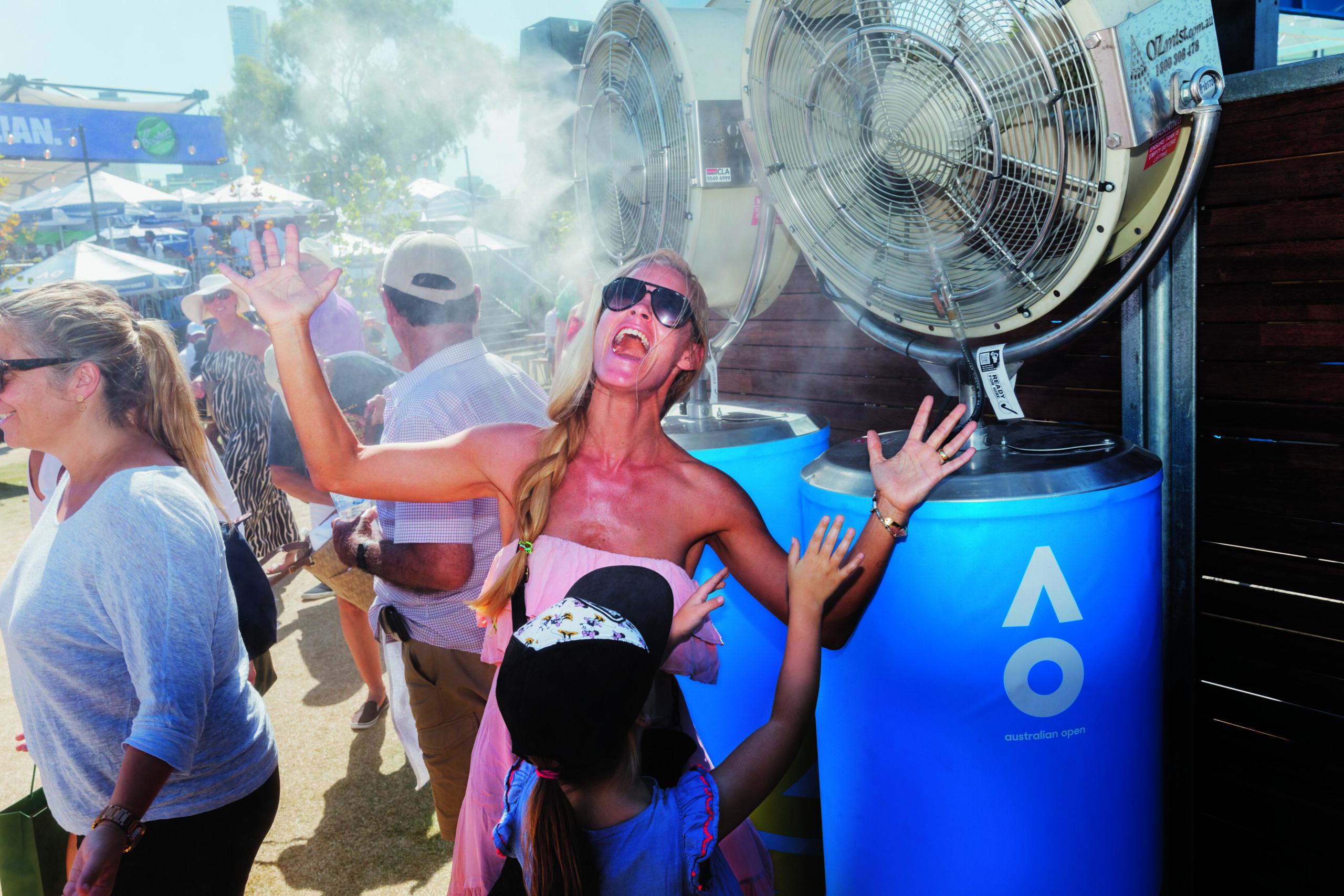
AUSTRALIA. Melbourne. Australian Open. 2018.

In 2007, when Roger Federer dubbed the Australian Open the “Happy Slam,” he crystallized a sentiment that players and fans had been feeling for years. Sure, maybe it’s the fresh outlook of a new season or the Aussie summer sun in the middle of the Northern Hemisphere’s cold winter. But it’s more than that. What transpires over the course of two weeks at Melbourne Park has a vibe the other majors just can’t beat. This fortnight is not just a competition — it’s a celebration of all things tennis. Yes, the Australian Open just hits different.

But it wasn’t always that way. Throughout the 1970s, top players routinely skipped the major Down Under — the trip too far, the money too low, and the courts too unplayable. Even the grass-savvy like Martina Navratilova and John McEnroe, who flatly said at one point the surface was “not good enough to play tennis on,” took a pass on the wild courts of the Kooyong Lawn Tennis Club for most of their early careers.

For fans, the experience at Kooyong was a mixed bag. It was peak Aussie casual, but that wasn’t always a compliment. Seats were few, which put most fans on blankets in the grass or behind a rope in standing room only. To view other courts, a bit of a hike was required. As Australian photographer Roger Gould recalled to Racquet, “To watch matches on some of the outside courts you had to sit up on a mound at the edge of the railway and look over the top of the court wire enclosure.”

By the early 1980s, the ITF warned Tennis Australia that their tournament was falling too far behind the other majors. And that was all they needed to hear. In 1985, the organization began to build not only an entirely new facility, but a completely different tournament with new stadiums, a new surface, and a new mentality. The formula was simple: investing in the happiness of players and fans would make for good business. If Wimbledon was the most prestigious, Roland Garros the most romantic, and the U.S. Open the most dramatic, the slam at Melbourne Park would become the most loved.

This year, Craig Tiley and his team at the Australian Open have upped the stakes once again. The prize money pool has gone up by another $10 million. The extremely rare travel stipend has been doubled. A post-workout and post-match recovery spa awaits players after they log their hours on the court in the Australian summer. They asked players to name their favorite chefs — and then flew them in from around the world. And, if that’s not enough, they are taking care of their coaches, too, with their own lounge, as well as complimentary meals and laundry service.

For the fans, a reimagined Garden Square (the space in front of Rod Laver Arena) is now shaded so fans can watch on-court action on the big screen and catch a break from the sun. The three-day Finals Festival filled with music, art, and fun returns but in a bigger stadium (bonus: these tickets also double as a grounds pass). They’ve taken inclusion to another level with All Abilities Day and thought about the needs of their neurodiverse community with calming sensory rooms. Misting fans, water fountains, and filling stations throughout the park are designed to make fans that much more comfortable. And you can get a craft beer for about $9? Yes, please. The list goes on. In other words, it’s hard to not feel loved by the Australian Open.

Now it’s time for the other majors to play catch up. Sure, they’ve engaged in a prize money race and thrown a concert or two. Could the USTA not press New York City to finally follow through on its plans to revamp the New York State Pavilion so that it serves the U.S. Open beyond the Unisphere as a broadcast backdrop? Would it kill the All England Club to collaborate with artists who are interested in this century? And if Roland Garros is bent on night sessions under the lights, how about more than a showcase for men’s tennis?

This year’s Australian Open has no shortage of incredible storylines. Naomi Osaka and Angelique Kerber, two former Aussie Open champions, hope to make deep runs once again after being away from the tour for more than a year as new moms. Novak Djokovic will undoubtedly try to start the year like he has so many, with an eye toward winning the elusive Grand Slam. Will relatively new slam winners like Carlos Alcaraz, Coco Gauff, Elena Rybakina, Aryna Sabalenka, and Marketa Vondrousova prove they’re here to stay — or will another first-timer break through? Only one outcome is guaranteed: no matter who wins, the Happy Slam always retains her title.

Allen McDuffee is a journalist and the creator of Court Theory.

Above: A selection from Martin Parr's Match Point, published by Magnum and excerpted in Racquet Issue No. 18.

Stay in touch

Sign up for our free newsletter

More from Racquet

Greetings from Tennis City, USA

A postcard from our favorite indie zine Portland Tennis Courterly's Wet Issue release party, where each microclimate seemed completely and utterly devoted to tennis, from the bagels toasting in the kitchen to a 1997 Riesling with notes of... tennis balls.

December 3, 2025

2025’s Top Five Rage-Bait Moments

In the spirit of transgressions, trolls, tirades, and another godforsaken years-end list, our resident advice columnist brings you the top five rage bait moments of 2025.

December 3, 2025

Jack Sock Veers Left

Last week, Racquet spoke with everyone’s favorite doubles partner, Jack Sock—he of the ferocious forehand and the Grand Slam doubles titles—about his recent shift to—shudder— pickle ball. A new documentary, Chasing Courts: The Jack Sock Story, follows Sock’s unlikely trajectory. 

December 3, 2025

The Greatest Thing I’ve Ever Seen on a Tennis Court, by Wright Thompson

It was the fall of 2005. I had not yet begun to lose things, and people, and parts of myself. I still believed in the one true way, as Federer did. Agassi knew better but I hadn’t lived enough to understand what I was watching. I was 29 years and two days old.  

December 1, 2025

Who Gets to Teach Tennis?

Inside the USTA’s quietly radical plan to rethink coaching

November 24, 2025

Racquet’s 2025 Holiday Gift Guide

We here at Racquet have amassed a guide to make your holiday gift-giving look effortlessly apropos and thoughtful. If this helps avert "tennis-scented candles" and other misguided purchases, so much the better. Happy Holidays from Racquet to you and yours.

November 19, 2025
See all posts