

Skip to Content
Newsletter

What Could/Should Racial Activism Look Like in 2021?

[vc_empty_space height="5px"]

By Van Sias

[vc_empty_space height="15px"]There’s no doubt that everyone involved in professional tennis is trying to navigate around the global pandemic to the best of their abilities. Players, whose focus primarily lies in optimizing their performance, have to now deal with testing, travel restrictions, and quarantining, while tournament organizers are just trying to even hold an event—with the notion of maintaining a livelihood precarious at best.

Throw in making a stand against racial injustice and it’s a lot.

Surely, that will remain a priority in the new year. Right?

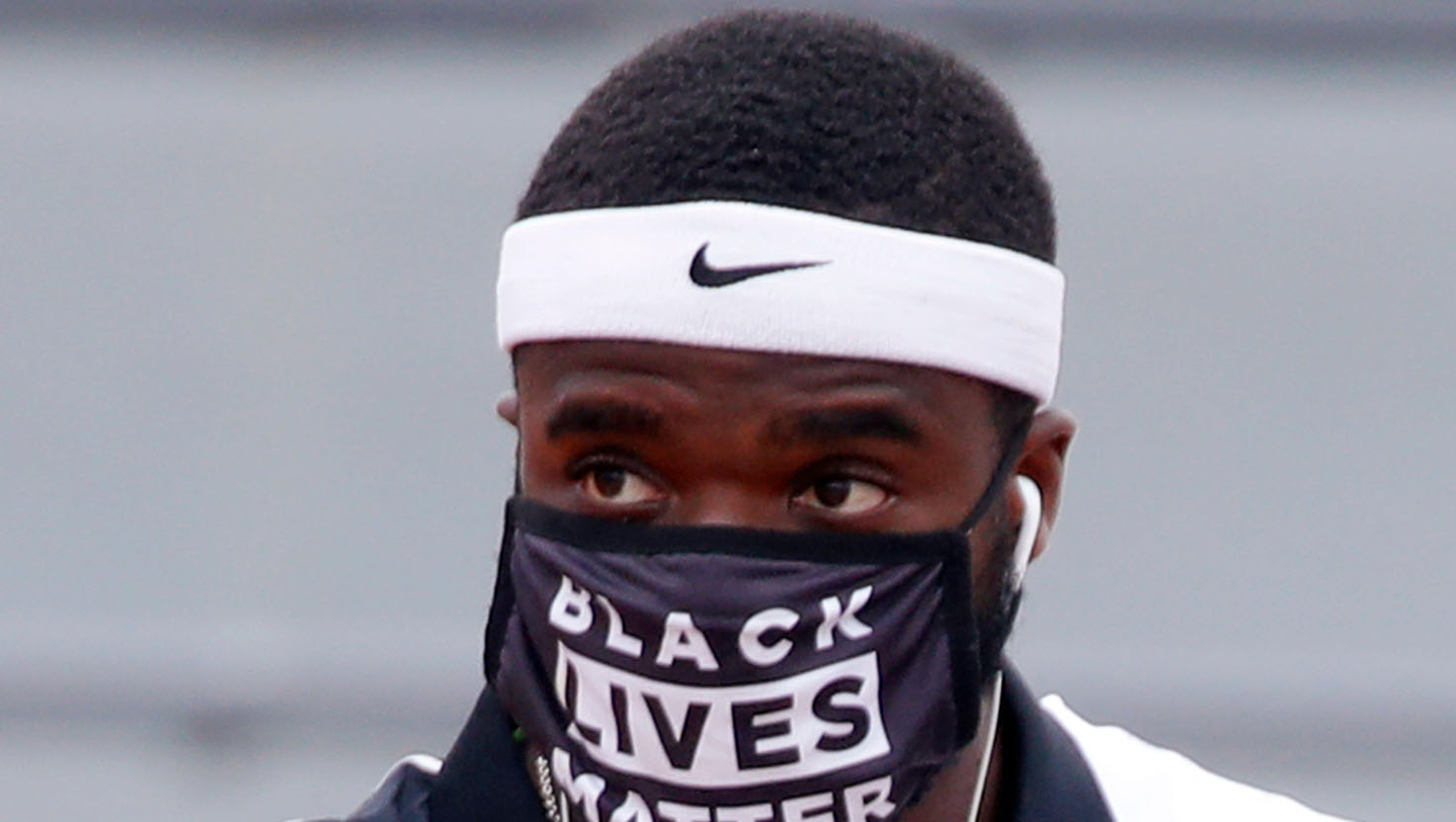
Amid all the horrors endured during 2020, the murder of Black men and women with seemingly no repercussions was among the most reprehensible. Millions of people around the country took to the streets in protest, and in the tennis world, Naomi Osaka, Frances Tiafoe, Coco Gauff, and Sloane Stephens, among others, used their respective platforms to make statements of their own. Major companies and sponsors contributed to organizations fighting prejudice, and the US Open put “Black Lives Matter” messaging front and center.

As the tours moved onto Europe, though, this past fall, the momentum generated by the protests appeared to flicker out. Granted, everyone was in scramble mode, with down is up being the norm (a French Open in September?), but tennis, for a while, was out of its bubble—not the pandemic-related one—and had become part of social change in a positive way.

Now that the 2021 season is starting up, what’s next from the tennis world in the fight against inequality and injustice? Has it moved on or is it willing to continue upon the path it set out on in 2020?[vc_empty_space height="15px"]

osaka-uso
Naomi Osaka wears a mask honoring Elijah McClain, a 23-year-old massage therapist from Aurora, Colorado, who was killed by police in August, 2019, on her way to winning the 2020 US Open.

[vc_empty_space height="15px"]Both tours have announced their schedules for the first few weeks of the year, with the Australian Open getting a later start. The men have two events first up—in Delray Beach, Fla., and Antalya, Turkey—while the women will be in Abu Dhabi. The fact that tennis is even happening with some semblance of a normal schedule requires a monumental effort from all parties involved, and everyone deserves kudos for making it happen.

One can’t help but be skeptical, though, that the likelihood of some form of Black Lives Matter messaging being on display this week and next, as it was in New York—save for the continued efforts of whatever Tiafoe decides to do—is going to happen.

But it could, though.

Just imagine a world where Reilly Opelka—who took part in the protests last year—walked out onto the court in Delray Beach as the defending champion wearing a mask with George Floyd’s name on it. Or if the reigning Australian Open winner Sofia Kenin had “BLM” written across her shoes for her opening match in Abu Dhabi, calling attention to the plights back home. Even though the protests have died down, there’s still injustice taking place that hasn’t been captured by smartphone.

For true change to happen, it can’t be solely up to the players of color to take on those responsibilities. Allyship, “reaching across the aisle,” what have you, is crucial: Embracing the opportunity to learn about the struggle of others and acting accordingly with that knowledge in hand can make a difference.

Ever inquisitive, Stefanos Tsitsipas took the time last year to reach out to Osaka in an effort to further understand what she was fighting for. Young Americans Kristie Ahn and Amanda Anisimova have been outspoken on social media about the injustice they’ve seen going on at home.

And, in case there is any concern about lending attention to other matters off the court, it is possible to play tennis well and stand up for a cause at the same time.

Obviously, Osaka’s efforts didn’t take away anything from her tennis. Instead, as she mentioned, she came to the US Open with seven masks for seven matches. Her efforts garnered attention outside of the tennis world, and she was named the AP Female Athlete of the Year. Tiafoe, using the power of social media to keep the conversation moving, reached the second week of the Open and won a Challenger title in Parma, Italy. He finished 2020 with his biggest honor, the ATP Tour’s Arthur Ashe Humanitarian of the Year Award.

The ATP and WTA Tours did not shy away from supporting their players who fought for justice, commenting more than they had in the past. It was a welcome sign of two organizations evolving, a necessity as both were forced to show more signs of unity in 2020 than ever before. Of course, maintaining the business model is important, but the opportunity is there to be a leader against injustice on a global scale amid all sports.

By its very nature, professional tennis is in a state of perpetual motion. Lost points and matches have to be left in the past before moving on. After a tournament ends, planning starts for the next edition shortly thereafter.

Here’s to hoping the efforts to combat racial injustice aren’t left in the past too—at least until there’s no longer a reason to do so.[vc_empty_space height="10px"]Van Sias has written about the pro game for Tennis magazine, Rolling Stone, and The Atlantic, among others.[vc_empty_space height="10px"]Above: Frances Tiafoe at the French Open, October 2020. (Alamy)[vc_column width="1/6"][vc_tweetmeme share_via="racqetmagazine"][vc_column width="1/6"][vc_facebook type="button_count"][vc_column width="1/6"][vc_column width="1/6"][vc_column width="1/6"][vc_column width="1/6"][vc_empty_space height="45px"][vc_column width="1/4"][vc_column width="1/2"]

Men’s adidas x Racquet Defiant Generation

racquet_adidas-defiant

[vc_btn title="GET IT NOW" style="outline" shape="square" color="success" size="lg" align="center" button_block="true" link="url:https%3A%2F%2Fracquetmag.com%2Fproduct%2Fadidas-x-racquet-defiant-generation%2F|title:GET%20IT%20NOW||"][vc_column width="1/4"]

Stay in touch

Sign up for our free newsletter

More from Racquet

Rafa Returns, in Four Parts

RAFA, a four-part documentary on the most reserved member of the Big Three, is out on Netflix. By director Zach Heinzerling, the series airs a side of Rafael Nadal that he rarely showed during his 24 years on the pro tour, but that many of us suspected, or hoped, was there all along. Racquet sat down with Heinzerling to talk about his unprecedented access, and how he was able to tease out the Rafa we now find on the screen.

May 29, 2026

ACE: Form and Function of Tennis Wear

In her new book, ACE: the times & style of tennis, creative director Sunita Kumar Nair delves into the history of tennis clothing, and what makes the court a de facto runway.

May 28, 2026

My Love-Hate Relationship with the French (Open)

There is a simple explanation for why Roland-Garros has so often decided to go its own way: because France thinks it is the best at everything. 

May 22, 2026

Rafael Jódar Isn’t Waiting for Anyone

Sinner and Alcaraz have split the last two calendar years of Grand Slams and counting, and have set themselves scarily far apart from the rest of the pack. But beneath their momentous, center-stage war, another is incubating.

May 18, 2026

Only the Most Tenacious Thrive on the Terre Battue

Rolex Testimonees Garbiñe Muguruza, and last year's women's singles champion Coco Gauff reflect on what it takes to lift the Suzanne-Lenglen trophy at Stade Roland-Garros in Paris.

May 18, 2026

Murder on a Roman Tennis Court

Renaissance painter Caravaggio killed a man at Campo Marzio, surrounded by pimps and pallacorda.

May 15, 2026
See all posts