

Skip to Content

A Riot of Colour with Agnès Ricart

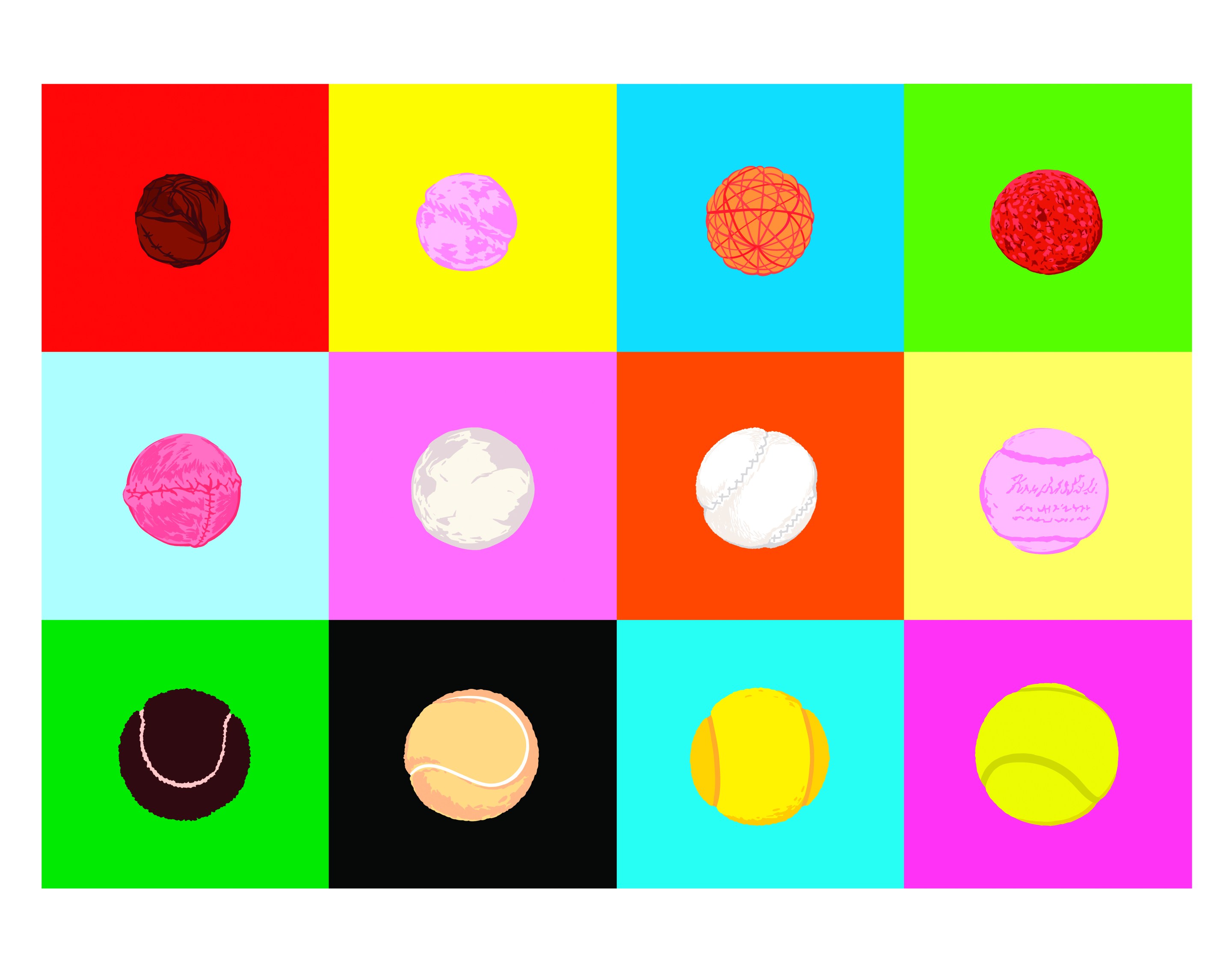
Agnès Ricart is a multimedia artist from Spain who—close Racquet readers will confirm—has been a staple in our visual vocabulary for the better part of a decade. Alongside classic Racquet illustrations such as Medvedev flipping the bird at the collected crowd at the US Open, Naomi Osaka's masked protest during COVID and even a protester using a tennis racquet to clear a cannister of tear gas. Her work is vivid and cheeky, and can be seen across the world from The Guardian to Die Ziet to the Economist. We asked her to bring to life an ode to the tennis ball in our latest issue, and to sit down for a Q&A about her artistic practice.

What’s your origin story? How did you come to be a top illustrator and animator, while managing to live in beautiful Valencia, Spain? 

I grew up in a tiny village in the Valencian countryside. I have a background in Fine Arts, along with two Master’s degrees in Art Education and Art Production. During my studies in the UK, I exhibited at the Oxford Museum of Art, an experience that broadened my perspective and pushed me to think internationally. 

I later lived in Barcelona, working with brands like Google and Carolina Herrera, and teaching illustration and animation before settling back in Valencia. 

Today, I feel fortunate to work with leading international brands from my sunny studio by the Mediterranean. While adapting to different time zones can be challenging, it’s incredibly rewarding to collaborate across borders and see my work published around the world.

Ivan Lendl dusts his racquet with sawdust (while wearing an incredible kit from Mizuno).

Is there a central philosophy behind what you do? 

I wouldn’t call it a strict philosophy, but there’s definitely a recurring thread of humor, wit, playfulness, and a certain dose of sarcasm. Over time, I’ve realized that this tone is deeply connected to my own personality and does naturally find its way into my work. 

Your style feels particularly resonant right now. What is it about your pieces that seem to capture the cultural zeitgeist?

I collaborate with some of the world’s leading newspapers and magazines, and I’m often commissioned to interpret both defining and defying moments of our time.

I think my work resonates because it balances a strong visual identity with the ability to reflect complex, contemporary narratives into images that feel clear, immediate, and impactful.

How do you approach a new project or medium? 

I begin with research, immersing myself in the subject and curating a wide range of visual references, from portraiture to abstract painting, as well as colors and textures that inspire me.

From there, I develop a series of initial concepts for the client to review. Once a direction is selected, I modulate and evolve the piece, shaping it according to the art direction while keeping space for creative exploration.

You work a number of prominent brands, each with their own message to tell; how do you integrate widely disparate stories with your signature style?

I enjoy experimenting and pushing visual boundaries, so I’m quite flexible when it comes to adapting my style to different narratives. My work is about bringing ideas to life (sometimes pretty wild ones) and shaping them in a way that serves each client’s vision.

That said, clients usually come to me because something in my visual language resonates with them, so there’s often a shared intention to preserve that identity while tailoring it to their message.

You’ve created a number of beautiful pieces for Racquet. Illustrating a sport often involves the depiction of movement; how do you manage to evoke the dynamism of tennis in a static medium? 

When portraying movement, especially in sports, a strong understanding of anatomy is essential. My background in traditional drawing gave me a solid foundation in representing the human body in motion from an early stage.

Also, tennis has always been close to me; my father was a coach, and I grew up playing regularly. That physical memory helps me intuitively understand how the body reacts and moves when chasing a ball, which makes it easier to translate that energy into an illustration.

Stay in touch

Sign up for our free newsletter

More from Racquet

From the Trenches of the World’s Most Obscure Racquet Sport

Stické tennis was invented in the 1870s in England, i’s a hodge-podge of tennis, squash, and real tennis. The game disappeared after the First World War. Just two courts are still playable. Yes, stické is the world’s most obscure racquet sport.

April 17, 2026

Racquet Retreat at Sensei Had us Breathing Easier

During this year's Indian Wells tournament, we launched a first-ever restorative trip for our nearest and dearest at the exclusive Porupine Creek property, and the results were... relaxing.

April 17, 2026

Jannik Sinner Can’t Lose (Except at Content)

When Aryna Sabalenka’s on-court intensity translates into campy, self-congratulatory TikToks, harmony is felt and sense is made. But Jannik’s on-court persona, tightly controlled like an unseasoned chicken breast, respectfully, need not be repackaged for YouTube. Because where is the flavor?!?

April 13, 2026

Issue No. 28: Tennis is the Blueprint

“To create one’s own world takes courage.” —Georgia O’Keefe

April 13, 2026

The Disappearing American College Tennis Player

These days, American college tennis is barely that: American

April 3, 2026

The Elegant Order of the Court

Sure, game-play conditions may vary, and a maintained court is more enticing for actual play, but as purely aesthetic fascinations, the inherently satisfying rationality of court design endures. 

April 3, 2026
See all posts