

Skip to Content

[vc_empty_space height="5px"]

By Giri Nathan

[vc_empty_space height="15px"]High drama is best consumed half-asleep. These are the truths I annually try to internalize during that first week of watching the Australian Open from the opposite side of the Earth. I’m still easing my way toward a full nocturnal lifestyle, so I’ve had my struggles. I was fortunate to be alert to see Fabio Fognini and Salvatore Caruso explode into volcanic hand gestures after their five-setter. I caught bits and pieces of Elina Svitolina dispatching Coco Gauff. I dearly wish I’d been up to see the drunk lady in the crowd call Rafa an “OCD fuck,” flip the bird, and get escorted out, but I was stone cold by then. I was already deep in the ZZZs the next night when Novak Djokovic mustered his five-set comeback with something torn in his torso. Can’t say the ESPN broadcast has made my plight any easier with its habit of kaleidoscoping three or seven different feeds on the screen. God forbid an American player play a single point that is unseen by all the die-hard American fans sitting bolt upright at 3 a.m. to watch solely corn-fed American players.

And who would want to watch an American when you could watch an Australian, anyway? The lifelessness of the pro tour in 2020 can be mostly chalked up to the fact that there was no one sitting there to enjoy it. Tennis offered no simulacrum of the real thing by, say, pumping in fake crowd noise, so this lonely sport only got lonelier, reduced to its barest elements: a ball passing over a net on some far-flung patch of concrete. But this crowd in Melbourne, even at partial capacity, has revitalized the viewing experience. Nick Kyrgios gave the Aussies all the plot twists they could have asked for in five sets against Ugo Humbert, and then in another five sets against Dominic Thiem. Ashleigh Barty and Alex de Minaur gave them similar satisfaction (if fewer heart palpitations) with their businesslike straight-set passage through the draw. Knowing what the crowd would do for their injury-smothered native son, Thanasi Kokkinakis, I steeled myself to watch his whole match, especially when I tuned in and saw he had taken the first set over Stefanos Tsitsipas.[vc_empty_space height="25px"]

thanasis
Thanasi Kokkinakis works the lawnmower (Getty)

[vc_empty_space height="15px"]Good thing I did. Kokkinakis played his first match in clothes fresh off the department-store rack, a one-time standout now without a clothing sponsor. His match against Tsitsipas was the first time he’d played on Rod Laver since stepping up to face Rafa at age 17 back in 2014. It was also the first time he’d made it to the second round of a major since 2015. And it was just the 32nd tour-level match he’d played since the start of 2016. That drought can be chalked up primarily to a pesky right shoulder (which he hurt after bench-pressing to look good in some sleeveless Nike tops), but also a pectoral muscle strain, an abdominal injury, an ankle here, a knee there, and last year’s severe bout of mononucleosis. I’m probably missing something. Kokkinakis collected them all. This waylaid a talent that was, after all, big enough to square off against Rafa on this same court as a teenager. Only a wild card and a convincing first round put the current world No. 267 back on court to play Tsitsipas. What this match revealed to the adoring crowd, and to me outside of intermittent naps, is that the underlying talent hasn’t gone anywhere: I see an all-world forehand, huge serves, shotmaking tendencies. Patch up what’s broken and that’s pretty clearly a player who should have a little number next to their name at every major.

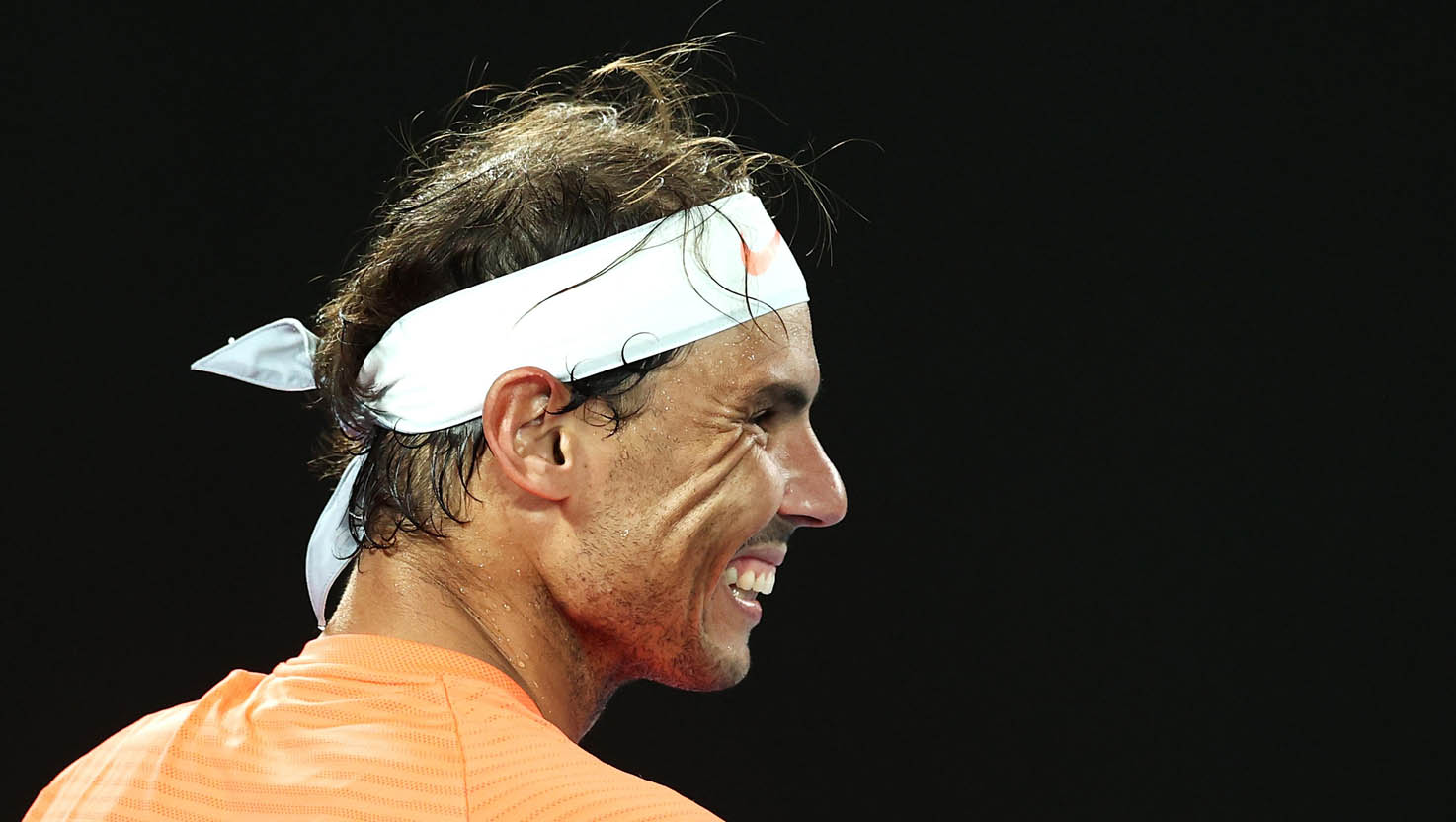
The Kokk took Stef to five sets without ever notching a single break, evading defeat in the fourth set many times until he notched the set with a backhand passing shot. Visibly moved by the crowd’s exhortations, he called on them time and again to “Give me something!” and they complied. They sure gave me something, too: I stayed alert for the majority of the match despite consuming one IPA and a large dosa earlier in the night. Their enthusiasm traveled 10,000 miles and gave me the resilience to keep fighting. The Australian crowd nearly willed long-suffering Thanasi Kokkanakis to a five-set upset over the No. 5 seed. They nearly willed me to stay awake through the first six games of the fifth set. Both heroic near-feats wouldn’t have been possible without them, and I’d like to end this column by expressing my gratitude, since they were booted from the premises just before midnight on Friday as Victoria entered another lockdown. We’ll miss you.[vc_empty_space height="10px"]Above: Rafa Nadal laughs off an unruly heckler. (Getty)[vc_column width="1/6"][vc_tweetmeme share_via="racqetmagazine"][vc_column width="1/6"][vc_facebook type="button_count"][vc_column width="1/6"][vc_column width="1/6"][vc_column width="1/6"][vc_column width="1/6"][vc_empty_space height="45px"][vc_column width="1/4"][vc_column width="1/2"]

Melbourne Parq Tee

parqsrec_melbourne-back

[vc_btn title="GET IT NOW" style="outline" shape="square" color="success" size="lg" align="center" button_block="true" link="url:https%3A%2F%2Fracquetmag.com%2Fproduct%2Fmelbourne-park-tee%2F|title:GET%20IT%20NOW||"]Racquet represents on public courts, not country clubs. Our limited-edition tee pays homage to the Australian Open with its riff on the New York City Parks Department logo, with a new twist.[vc_column width="1/4"]

Stay in touch

Sign up for our free newsletter

More from Racquet

An Open Letter To Daniil Medvedev: Are You “So Back?”

Racquet’s See You In Court is a regular column in which Melissa Kenny, a famously mediocre lifelong player, opines on pro tennis. She also writes Hard Hitting, a Substack about the thrills and frustrations of recreational tennis.

March 20, 2026

Dispatches from the Desert

Our Managing Editor Wendy Laird is on the grounds and has Dispatches from the Desert coming in on a regular basis: Today the BNP Paribas Open is over. Long live the BNP Paribas Open.

March 6, 2026

A Playable Feast

There’s something wonderful about seeing “closed for the season” on a hotel’s website. They’re just four words, but they say so much: we don’t wring every penny from this property; this location has a “season;” this hotel values your experience far too much to stay open during sub-par weather. “Closed for the season” has a lot of sexy indifference to it; it makes you want to visit even more.

March 2, 2026

In Dubai, Uncertainty on Court and in the Skies

By the end of the week, it was hard to tell what felt more fragile: the schedule, the draw, the final, or the belief that sport can stay separate from the world around it.

February 28, 2026

Jessica Pegula has a Serious Sleep Routine

World No. 5 Jessica Pegula has had a busy few weeks. From lifting the trophy in Dubai for her fourth Masters 1000 title to becoming Blueair’s air wellness ambassador, her results call attention to what many of us already know: sleep hygiene, including managing air quality, is an important part of recovery and overall health.

February 27, 2026

Racquet’s Guide to Indian Wells

For the uninitiated, we humbly present the following guide to the area surrounding the area. While by no means exhaustive, here are some picks for places of interest while on your way to and from the tournament: some restaurants, sights and even a couple places to stay. And if you’ve been to Indian Wells before, welcome back: It’s going to be another great year.

February 27, 2026
See all posts