

Skip to Content
Newsletter

Reports of Andy Murray’s Demise Have Been Greatly Exaggerated

[vc_empty_space height="5px"]

By Giri Nathan

[vc_empty_space height="15px"]I buried Andy Murray too soon. The visible pain, the wrenching press conference, the unconventional surgery—sure seemed like time for fans, players, writers, the general population of Scotland to grab a shovel and pay their respects. I had an elegy up by the next morning. And I was elated to see it rendered obsolete in the same calendar year. Murray’s pseudo-retirement conference was in January; his goal was to squeeze in one last Wimbledon, and even that figured as mostly symbolic. By June, he was playing doubles again. By August, he had tiptoed back into singles. In October, he beat world No. 13 Matteo Berrettini; two weeks later he lifted a 250-level trophy in Antwerp. Then came a long layoff, lengthened by the pandemic. And last week in “Cincinnati”–via–New York, Murray dispatched world No. 7 Sascha Zverev, which, Sascha slander notwithstanding, remains an astounding feat for someone who was busy getting his femur coated in metal some 20 months ago. On Tuesday Murray began his US Open, the first major of his comeback, and eked out a five-set win over Yoshihito Nishioka.

The hip-resurfacing surgery took away Murray’s chronic pain. It also returned some lost pieces of his game. “For the two years before I had the operation I couldn’t extend my leg properly, so my right leg would always bend when I went to extend it and that was affecting my serve a lot. I had to change my ball toss and was not able to drive up properly,” Murray told the BBC this July. “But now, because it does extend properly, I am able to serve well again and am able to serve as hard as I was in my mid-20s,” he said. “Obviously when you are able to serve bigger and harder, it means more shorter points—and that means good news for the body and the hip. The harder I serve, the better it is for my other hip I guess.”

Muzza needed every bit of that extra juice on Tuesday to survive Nishioka, one of the direst possible first-round draws for a player looking to shorten points. The world No. 49, whose penchant for loopy forehands and improbable retrievals turns every baseline exchange into a middle-distance race, took the first two sets, helped along by 32 unforced errors from Murray. Then Murray won the next two sets in tiebreaks, hitting through a Nishioka match point in the fourth. Down a break in the fifth, Murray broke back in characteristic fashion: a precision lob. No other shot evokes Murray more clearly in my mind. The win wasn’t pretty, but that’s on brand too, of course: Andy Murray always shows his work. His toes showed the work too, one hears. “I need an ice bath now, but they stipulate you can only have one if it’s an emergency,” said Murray after the match. “I’d say this was an emergency.”

The scheduling gods granted Murray the longest possible recovery time, slotting him for the late session on Arthur Ashe on Thursday, but that wasn’t enough to recover from a four-hour, 38-minute odyssey. A battered Murray walked onto the court, and Felix Auger-Aliassime—20 years young and serving like it—buffeted him out of his comeback major in straights. It was as efficient and authoritative a match as I’ve ever seen from the kid who looks all but fated for the game’s shiniest things. His opponent, one of the sport’s best returners, didn’t earn a single break point. There were grimaces, but not the kind you like to see from Andy Murray.

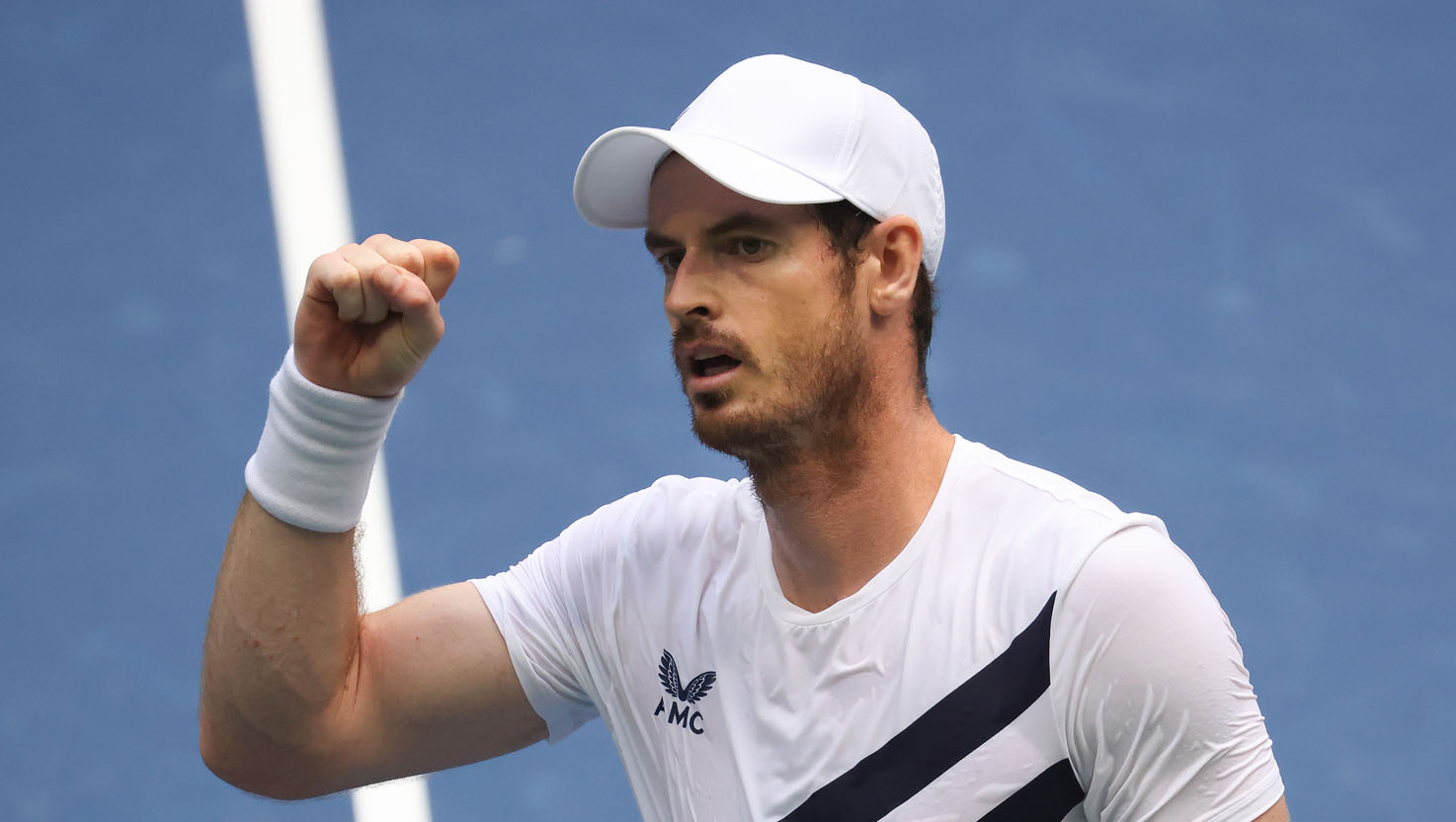
Who could take in the broader arc and still deem this week unsatisfying, though? Watching that match against Nishioka, it was impossible to ignore the parallels to Murray’s last match at a major—which looked, for a while, to be his very last match at a major. That was a punishing five-set loss against Roberto Bautista Agut in the first round of the 2019 Australian Open. I liked how the folks at The Tennis Podcast phrased his redemption: With his five-set win here in New York, Murray “rewrote his match against Bautista Agut and gave it a happy ending.” This result might be a first step toward deeper runs at the majors. Or it’s just one more endnote on a career full of charmingly muleheaded resilience. I won’t pretend to know how far Andy Murray’s second act goes, but I imagine he, and millions of onlookers, are grateful that he has one at all. And now I know better than to write another premature obit.[vc_empty_space height="25px"]Above: Andy Murray mounts his five-set comeback in the first round of the U.S. Open. (Getty Images)[vc_column width="1/6"][vc_tweetmeme share_via="racqetmagazine"][vc_column width="1/6"][vc_facebook type="button_count"][vc_column width="1/6"][vc_column width="1/6"][vc_column width="1/6"][vc_column width="1/6"][vc_empty_space height="45px"][vc_column width="1/4"][vc_column width="1/2"]

Buy Now
Issue No. 14

racquet_issue-14

[vc_btn title="BUY NOW" style="outline" shape="square" color="success" size="lg" align="center" button_block="true" link="url:https%3A%2F%2Fracquetmag.com%2Fproduct%2Fissue-no-14%2F|title:BUY%20NOW||"]Our solitary pursuits issue, conceived and executed during quarantine. Andrea Petkovic on holiday, selfies from Stefanos Tsitsipas a.k.a. Steve the Hawk, and Serena and Venus singing karaoke on the Lower East Side.[vc_column width="1/4"]

Stay in touch

Sign up for our free newsletter

More from Racquet

From the Trenches of the World’s Most Obscure Racquet Sport

Stické tennis was invented in the 1870s in England, i’s a hodge-podge of tennis, squash, and real tennis. The game disappeared after the First World War. Just two courts are still playable. Yes, stické is the world’s most obscure racquet sport.

April 17, 2026

Racquet Retreat at Sensei Had us Breathing Easier

During this year's Indian Wells tournament, we launched a first-ever restorative trip for our nearest and dearest at the exclusive Porupine Creek property, and the results were... relaxing.

April 17, 2026

Jannik Sinner Can’t Lose (Except at Content)

When Aryna Sabalenka’s on-court intensity translates into campy, self-congratulatory TikToks, harmony is felt and sense is made. But Jannik’s on-court persona, tightly controlled like an unseasoned chicken breast, respectfully, need not be repackaged for YouTube. Because where is the flavor?!?

April 13, 2026

Issue No. 28: Tennis is the Blueprint

“To create one’s own world takes courage.” —Georgia O’Keefe

April 13, 2026

The Disappearing American College Tennis Player

These days, American college tennis is barely that: American

April 3, 2026

The Elegant Order of the Court

Sure, game-play conditions may vary, and a maintained court is more enticing for actual play, but as purely aesthetic fascinations, the inherently satisfying rationality of court design endures. 

April 3, 2026
See all posts