

Skip to Content
Newsletter

Ringside for Jabeur vs. Rybakina

[vc_empty_space height="5px"]

By Giri Nathan

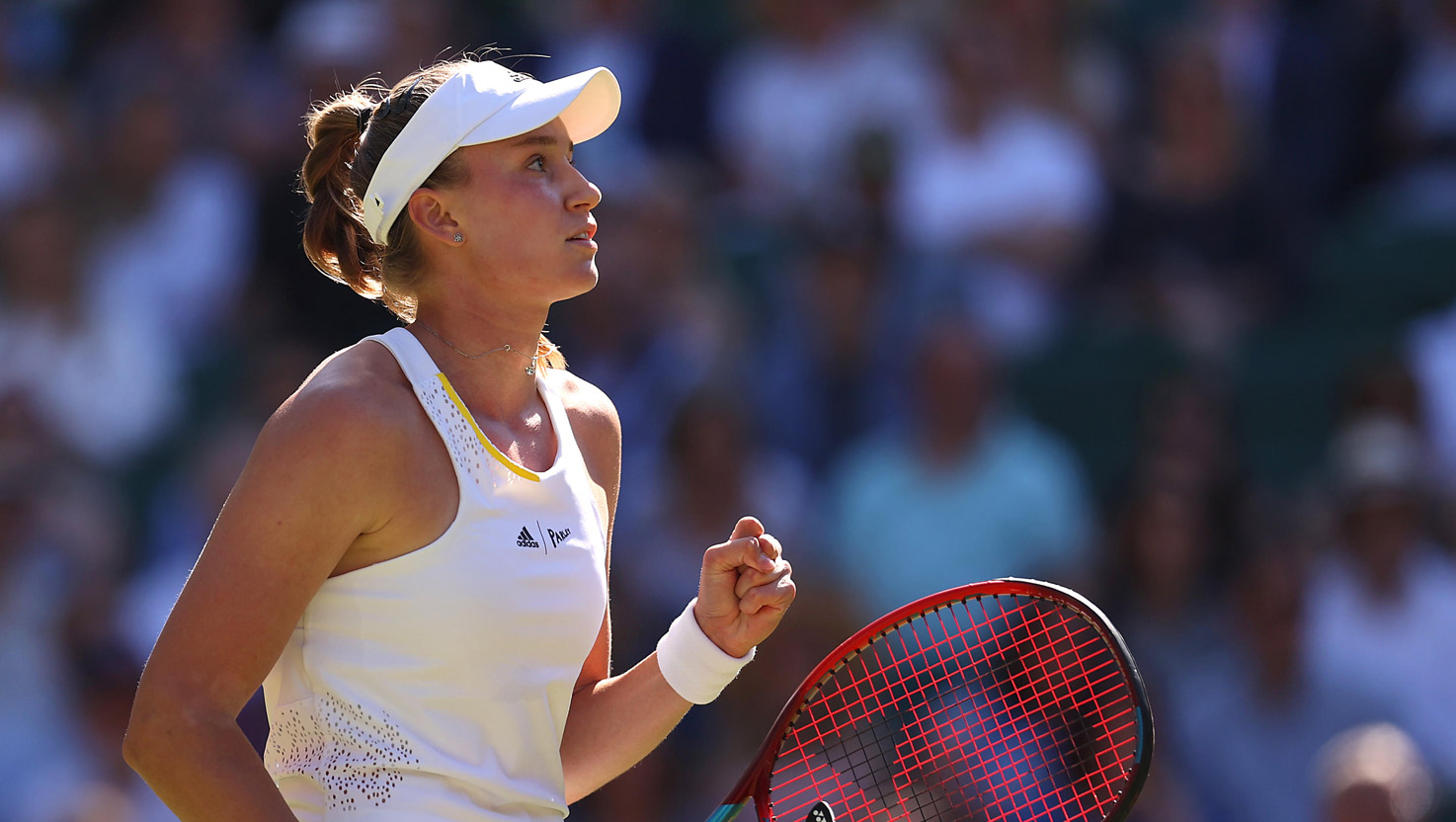
[vc_empty_space height="15px"]They say in boxing that “styles make fights.” I think this is generally true of tennis: The old rock/paper/scissors dynamic makes it hard to predict a fight between two players, because you have to wait and see how their styles might interact, and because those styles morph across seasons and surfaces. I wish it were true in a different sense: that every clash of different styles guaranteed entertainment. It doesn’t always work out that way. Sometimes it’s because one player’s just so good it’s made the other’s style illegible. Sometimes one player expresses her style too well and, whoops, deletes the opponent from the contest. That’s how Elena Rybakina, the 23-year-old representing Kazakhstan, treated former champ Simona Halep for stretches of their Wimbledon semifinal on Thursday, en route to a 6–3, 6–3 win.

Halep had been the steadiest player of the fortnight, losing just 28 games heading into the final and demolishing dangerous competition in the prior two rounds. As a diminutive player who can’t rely on her serve for cheap points, Halep makes for an unlikely, but by now undeniable, grass-court force. She won the title at Wimbledon in 2019, and missed 2021 with a calf injury, but made another deep run here to string together 12 straight matches, which only Serena has topped in recent history. Halep excellence has a familiar look: a dust cloud tearing around the court, sending everything back deep. And still—Rybakina just cut through it all. Faced with serves pushing past 120 mph, and ceaseless baseline bullying, Halep’s game plan was bunk. To counterpunch you need to get a racquet on the ball.

It must rule to flex the way Rybakina did earlier this week, when describing her own bang-bang tennis: “I just know that I have this gift. I’m tall and I play really fast. It’s effortless, I would say. It’s not something I'm working [on] in the gym or something. This is my weapon, and I’m just trying to use it as much as I can.” There is truth here; the sport never looks easier than in the hands of a tall person with immaculate timing. Rybakina, who is third on tour this season in percentage of service points won, had a flurry of success in early 2020, and is warming back up. If she can maintain the quality from her semifinal, victory is almost certain for the No. 17 seed, who has spent Wimbledon tactfully ducking reporters’ questions about her Russian roots, as she nears the finish line of this purposefully (and deludedly) Russian-free event.

That’s not to cast excess doubt on her opponent, Ons Jabeur, perhaps the best watch on tour, who has just become the first Arab and first African woman in a major final. But Rybakina just played a match more impressive than any that Jabeur played in the second week. The No. 2 seed let slip an unfocused set in each of her last two matches, including her semifinal against dear friend and forehand slice enthusiast Tatjana Maria, who was herself on an anomalous and career-defining run, but whom Jabeur should have been able to put away quicker. The 27-year-old Jabeur is playing the best tennis of her life, though under the new weight of high expectations.

The power of Rybakina is unlike anything Jabeur has faced thus far. It’s also fair to say that Rybakina hasn’t seen a player as hard to pin down as Jabeur. She’s a chameleon, mixing up her tennis for every occasion, whether that means streamlining it for flat pace and placement, or warping it for underspin high jinks. It’s a guessing game, and a thrilling if occasionally hair-raising one. Yet I often have to remind myself to separate entertainment value and genuine efficacy. Variety is not itself a promise of success. It’s always better to have the one transcendent plan than to have five decent ones to toggle between. Who’ll bring the best to Saturday’s fight?[vc_empty_space height="15px"]Above: Elena Rybakina of… Kazakhstan! (Getty) [vc_column width="1/6"][vc_tweetmeme share_via="racqetmagazine"][vc_column width="1/6"][vc_facebook type="button_count"][vc_column width="1/6"][vc_column width="1/6"][vc_column width="1/6"][vc_column width="1/6"][vc_empty_space height="45px"][vc_column width="1/4"][vc_column width="1/2"]

NOW AVAILABLE
Issue No. 19

racquet_issue-19

[vc_btn title="BUY NOW" style="outline" shape="square" color="success" size="lg" align="center" button_block="true" link="url:https%3A%2F%2Fracquetmag.com%2Fproduct%2Fissue-no-19%2F|title:GET%20IT%20NOW||"][vc_column width="1/4"]

Stay in touch

Sign up for our free newsletter

More from Racquet

Rafa Returns, in Four Parts

RAFA, a four-part documentary on the most reserved member of the Big Three, is out on Netflix. By director Zach Heinzerling, the series airs a side of Rafael Nadal that he rarely showed during his 24 years on the pro tour, but that many of us suspected, or hoped, was there all along. Racquet sat down with Heinzerling to talk about his unprecedented access, and how he was able to tease out the Rafa we now find on the screen.

May 29, 2026

ACE: Form and Function of Tennis Wear

In her new book, ACE: the times & style of tennis, creative director Sunita Kumar Nair delves into the history of tennis clothing, and what makes the court a de facto runway.

May 28, 2026

My Love-Hate Relationship with the French (Open)

There is a simple explanation for why Roland-Garros has so often decided to go its own way: because France thinks it is the best at everything. 

May 22, 2026

Rafael Jódar Isn’t Waiting for Anyone

Sinner and Alcaraz have split the last two calendar years of Grand Slams and counting, and have set themselves scarily far apart from the rest of the pack. But beneath their momentous, center-stage war, another is incubating.

May 18, 2026

Only the Most Tenacious Thrive on the Terre Battue

Rolex Testimonees Garbiñe Muguruza, and last year's women's singles champion Coco Gauff reflect on what it takes to lift the Suzanne-Lenglen trophy at Stade Roland-Garros in Paris.

May 18, 2026

Murder on a Roman Tennis Court

Renaissance painter Caravaggio killed a man at Campo Marzio, surrounded by pimps and pallacorda.

May 15, 2026
See all posts