

Skip to Content

[vc_empty_space height="5px"]

By Giri Nathan

[vc_empty_space height="15px"]Tennis players are gathering again. The pro tours are humming to life, as players huddle inside a bubble to play Cincinnati in New York. The public courts are as lively as ever, and the USTA has radio spots telling people to get out there and hit. Isolation is steadily, often ill-advisedly, coming to an end. But don’t forget how lonely these past few months have been, how many odd hobbies and habits you cultivated along the way. Our new Issue No. 14 is devoted to all those “solitary pursuits,” and inside you’ll find stories of private obsessions, missed vacations, digital romances, with tennis as the through line. You’ll also find my essay about the chief “solitary pursuit” the sport has to offer: hitting against a wall. Worldwide, the wall was the most popular tennis partner in the year 2020. Probably every other year, too.

The wall does have its clear advantages. You never have to call it to set up a time. It’ll never flake on the plan. It doesn’t have an off day, or break a string, or tell you it is “trying something new on my forehand.” It hits an even, consistent ball.

But it’s not so prevalent among the game’s top players, I found. Roger Federer has spent some of his COVID downtime tooling around against a wall at home, but few pros sing the wall’s praises. Mostly it’s brought up as a fond, blurry memory. We see original photos of the wall that Guillermo Vilas trained on as a kid in Argentina. We hear about Frances Tiafoe teaching himself ground strokes on a wall at the Maryland tennis center where his father worked and where he grew up. We watch as Novak Djokovic live-streams a visit to the bomb-ravaged wall he trained on in the former Yugoslavia. Simona Halep told me that she misses the wall, and plans to hit on the next one she sees. Angelique Kerber said that she used to ask her parents, grandparents, and friends to play; when they declined, they’d point her to the wall. Barbora Strycova calls the wall “the best teacher.” None of them have kept it up as a regular practice.

Back in 1988, Danish pro Torben Ulrich was already mourning the wall’s slumping popularity by starring in a French Tennis Federation movie called La balle au mur. In it, Ulrich makes a case for wall-hitting as a meditative practice, rallying against the wall of a Paris metro car, against the side of a bus, in a trench coat and a heavy beard. Ulrich, one of the coolest characters the sport has ever seen, has managed to also incorporate it into his painting practice. A canvas, too, can become a hitting partner.[vc_empty_space height="25px"]

walls5
Torben Ulrich, "Imprints of Practice" series, Untitled, 1981

There are a couple true believers out there, though, still hitting against the wall, and in this piece I share their stories, which range from the suburbs of South Africa to the hills of South India. There’s also Brad Gilbert—perhaps the greatest living proponent of the wall, and of swinging a tennis racquet in general—who mounts an enthusiastic defense of this dying practice. This is the wall that Brad hits against on the beach in Malibu.[vc_empty_space height="25px"]

walls4
Brad's secret spot on the coast

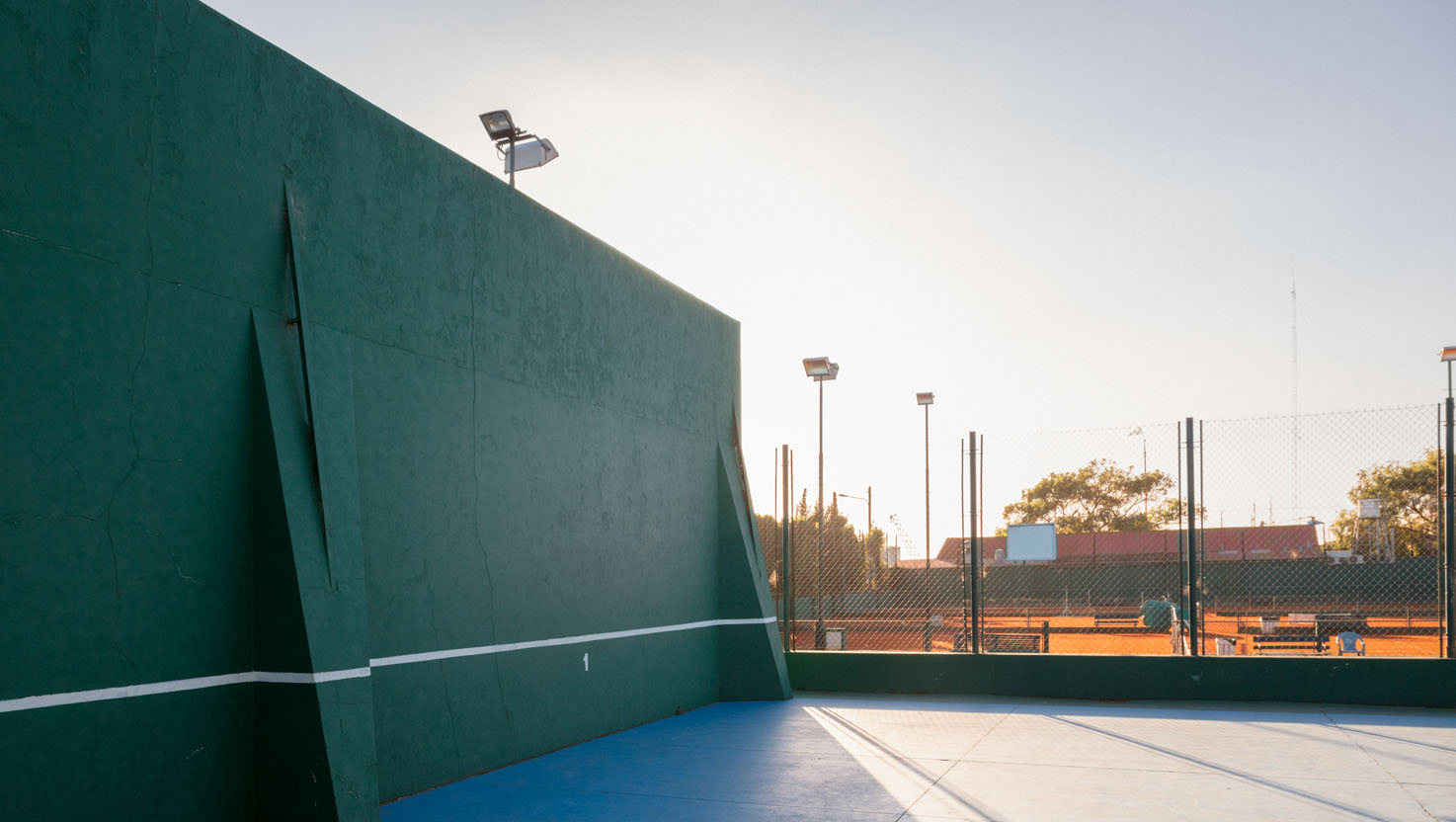
If I had that wall, I’d be up at dawn too.[vc_empty_space height="25px"]Above: The wall where Guillermo Vilas honed his game, in Club Nautico Mar del Plata, Argentina (Photo: Vicente Munoz)[vc_column width="1/6"][vc_tweetmeme share_via="racqetmagazine"][vc_column width="1/6"][vc_facebook type="button_count"][vc_column width="1/6"][vc_column width="1/6"][vc_column width="1/6"][vc_column width="1/6"][vc_empty_space height="45px"][vc_column width="1/4"][vc_column width="1/2"]

Buy Now
Issue No. 14

racquet_issue-14

[vc_btn title="BUY NOW" style="outline" shape="square" color="success" size="lg" align="center" button_block="true" link="url:https%3A%2F%2Fracquetmag.com%2Fproduct%2Fissue-no-14%2F|title:BUY%20NOW||"]Our solitary pursuits issue, conceived and executed during quarantine. Andrea Petkovic on holiday, selfies from Stefanos Tsitsipas a.k.a. Steve the Hawk, and Serena and Venus singing karaoke on the Lower East Side.[vc_column width="1/4"]

Stay in touch

Sign up for our free newsletter

More from Racquet

From the Trenches of the World’s Most Obscure Racquet Sport

Stické tennis was invented in the 1870s in England, i’s a hodge-podge of tennis, squash, and real tennis. The game disappeared after the First World War. Just two courts are still playable. Yes, stické is the world’s most obscure racquet sport.

April 17, 2026

Racquet Retreat at Sensei Had us Breathing Easier

During this year's Indian Wells tournament, we launched a first-ever restorative trip for our nearest and dearest at the exclusive Porupine Creek property, and the results were... relaxing.

April 17, 2026

Jannik Sinner Can’t Lose (Except at Content)

When Aryna Sabalenka’s on-court intensity translates into campy, self-congratulatory TikToks, harmony is felt and sense is made. But Jannik’s on-court persona, tightly controlled like an unseasoned chicken breast, respectfully, need not be repackaged for YouTube. Because where is the flavor?!?

April 13, 2026

Issue No. 28: Tennis is the Blueprint

“To create one’s own world takes courage.” —Georgia O’Keefe

April 13, 2026

The Disappearing American College Tennis Player

These days, American college tennis is barely that: American

April 3, 2026

The Elegant Order of the Court

Sure, game-play conditions may vary, and a maintained court is more enticing for actual play, but as purely aesthetic fascinations, the inherently satisfying rationality of court design endures. 

April 3, 2026
See all posts